When my children were grown, moved out, and I finally had both the time and financial ability to travel, I used to say something that sounded dramatic:
I wanted to see the world while there was still a world to see.
War.
Famine.
Natural disasters.
Human stupidity.
Pick your category.
My fear was that places on my bucket list would disappear before I ever had the chance to stand in them.
Not because time passed.
But because people destroyed them.
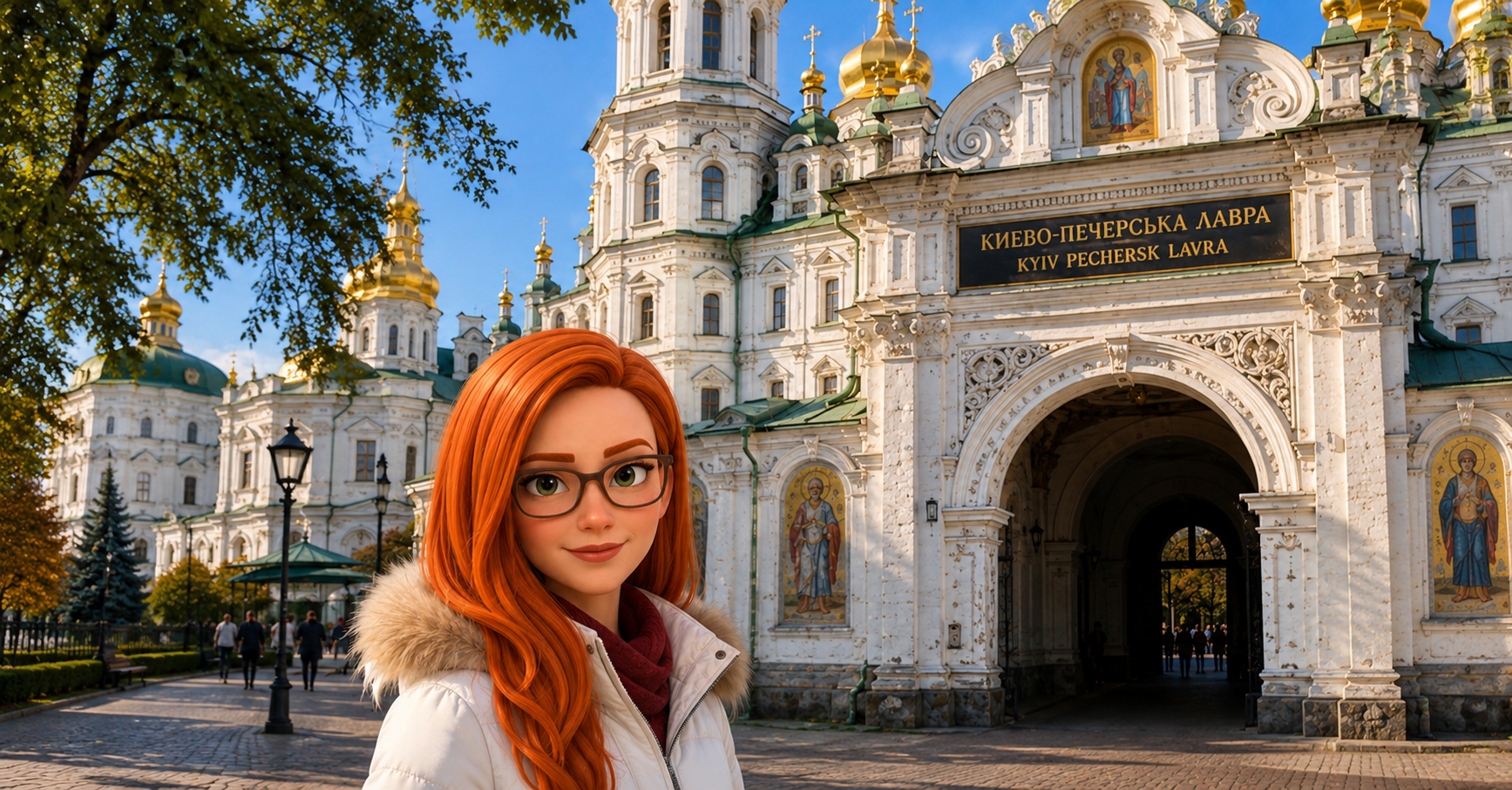
In 2024, I stood at Kyiv Pechersk Lavra in Ukraine and took this photo.
Yesterday, Russia struck the same historic religious complex.
And I cannot stop thinking about it.
Because this is exactly what I meant.
The places we dream of visiting do not exist in a protective bubble waiting for us to arrive.
They are vulnerable.
To bombs.
To fire.
To politics.
To greed.
To indifference.
To people who think destruction is easier than preservation.
Kyiv Pechersk Lavra was founded in 1051.
Nearly a thousand years ago.
People prayed there before the United States existed.
Before modern Russia existed.
Before most of the borders people argue about today had even been imagined.
For centuries, people have gathered there to worship, celebrate, mourn, and remember.
Empires rose.
Empires fell.
Wars came and went.
Governments changed.
The Lavra remained.
When I visited, I saw tourists taking photographs.
Families walking together.
Worshippers lighting candles.
Grandparents holding children’s hands.
Ordinary people living ordinary lives around an extraordinary place.
And that’s what I wish more people understood when they talk about Ukraine.
Far too often, the conversation sounds like a business negotiation.
A land deal.
A dispute over territory.
A line on a map.
As if giving away part of a country is no different than redrawing property boundaries.
But a country is not just land.
It’s churches.
It’s schools.
It’s neighborhoods.
It’s cemeteries.
It’s language.
It’s culture.
It’s history.
It’s memories.
It’s the places where people fell in love, got married, raised children, buried parents, and built lives.
It’s the places that tell people who they are.
Yesterday’s strike damaged a cathedral.
But the cathedral isn’t really the point.
The point is what disappears when people stop seeing places as homes and start seeing them as bargaining chips.
The point is what gets lost when history becomes collateral damage.
The point is that every missile destroys more than a building.
It destroys pieces of a story that can never be recreated exactly as they were before.
I look at this photograph differently today.
At the time, it was simply a travel photo.
Today, it feels like evidence.
Proof that I stood in a place that survived nearly a thousand years and still wasn’t safe from the choices of people living in the present.
When I started traveling, I said I wanted to see the world while there was still a world to see.
Standing in Kyiv in 2024, I didn’t realize how literal that statement would become.
Because the greatest threat to the places we treasure isn’t time.
It’s the belief that they’ll always be there tomorrow.
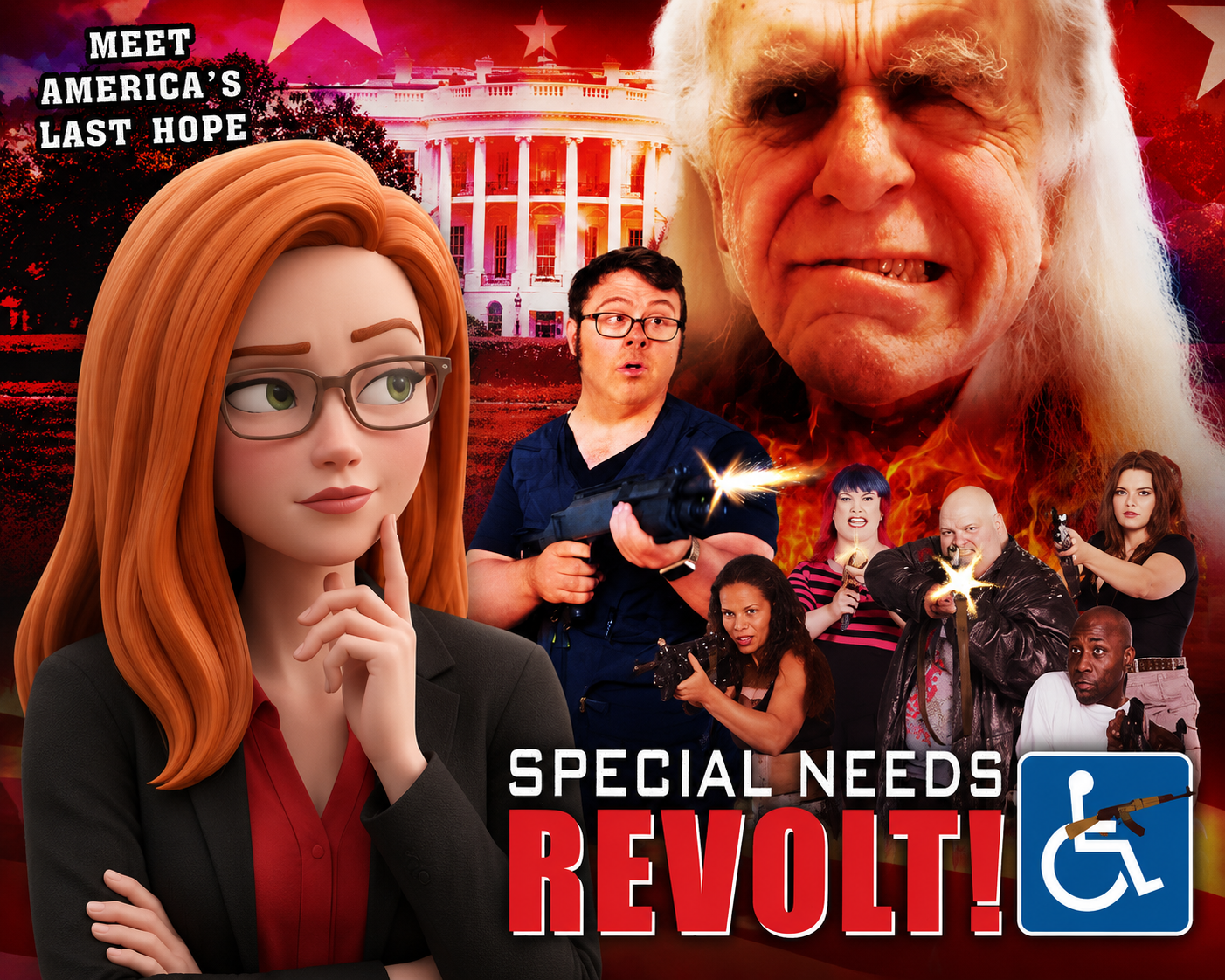
A relatively new independent film called Special Needs Revolt! imagines a future where people with disabilities are stripped of their rights and pushed to the margins of society.
It’s satire.
It’s fiction.
It’s exaggerated.
At least that’s what we’d like to think.
Because history suggests something else.
History suggests that every generation finds a group of people it is comfortable underestimating.
People it decides are less capable.
Less valuable.
Less deserving of a voice.
And history also suggests those groups eventually get tired of it.
What struck me about this movie isn’t the plot.
It’s the assumption underneath it.
The assumption that disability belongs to someone else.
Some other family.
Some other neighborhood.
Some other life.
But disability isn’t a niche issue.
It’s one of the few communities that almost anyone can join at any time.
A car accident.
A stroke.
A cancer diagnosis.
A traumatic brain injury.
A child born with different needs.
A parent developing dementia.
Enough birthdays.
That’s it.
Welcome to the club.
Which is why I’ve never understood why we talk about disability as if it affects only a small group of people.
It affects all of us.
Directly.
Indirectly.
Today.
Or eventually.
And yet society still tends to measure people by what they can’t do instead of what they can.
We see a wheelchair before we see a person.
A diagnosis before we see talent.
A limitation before we see potential.
That’s not a disability problem.
That’s a perspective problem.
I’ve met people with disabilities who contribute more to their communities than people with every advantage imaginable.
I’ve also met perfectly healthy people who spend their lives convincing themselves that other people are the problem.
The difference isn’t ability.
It’s opportunity.
It’s inclusion.
It’s whether someone was given the chance to participate in the first place.
That’s why stories like Special Needs Revolt! matter.
Not because they’re comfortable.
Because they’re uncomfortable.
They force us to ask who gets included.
Who gets heard.
Who gets ignored.
And who gets underestimated.
Personally, I’ve learned that underestimating people is almost always a mistake.
Especially when society has been doing it for generations.
Scarlett says no.
To writing people off.
To defining people by a diagnosis.
And to pretending disability is somebody else’s issue.
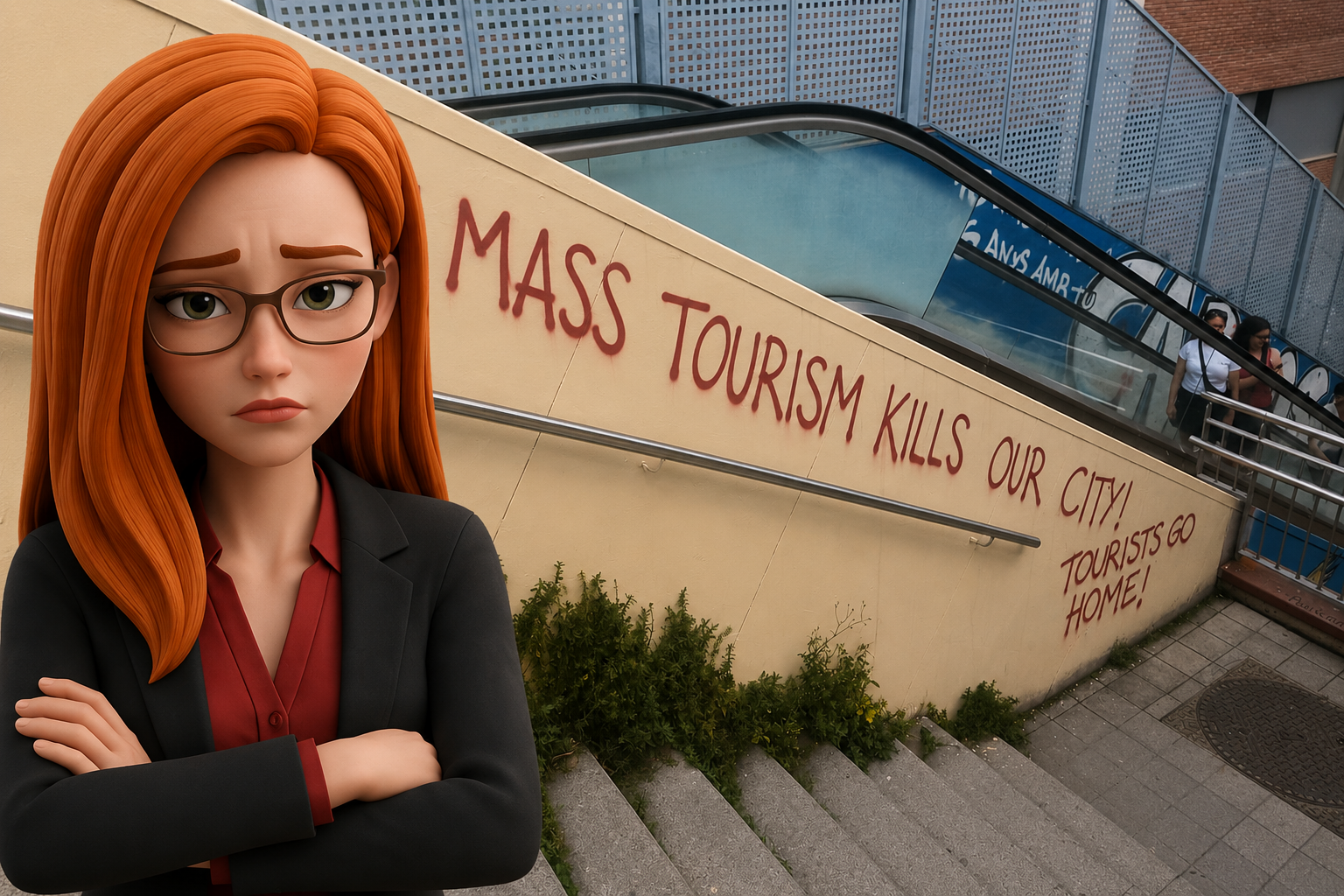
The first time I visited was about 15 years ago. Before Airbnb exploded. Before every spare bedroom, apartment, and broom closet became a vacation rental opportunity.
I returned in 2025.
The city was still beautiful.
The architecture was still stunning.
The food was still incredible.
But something felt different.
For the first time, I found myself paying attention to the people who actually lived there.
Not the tourists.
Not the influencers.
Not the travel bloggers.
The residents.
The people trying to afford rent.
The people trying to raise families.
The people watching their neighborhoods slowly transform into destinations rather than communities.
And it got me thinking.
We celebrate growth as if it’s automatically a good thing.
But growth for whom?
At what point does a neighborhood stop being a neighborhood and become a product?
At what point does “economic opportunity” become “you can no longer afford to live where your family has lived for generations”?
Those aren’t just Barcelona questions.
They’re everywhere.
We’ve seen it in cities.
We’ve seen it in small towns.
We’ve seen investors buy homes faster than families can.
We’ve seen communities transformed into assets.
We’ve seen people priced out of places they helped build.
Barcelona just made it impossible to ignore.
The city is still beautiful.
But beauty isn’t enough.
A place isn’t just its buildings.
It’s the people.
The culture.
The history.
The local businesses.
The families.
The community.
And if those things disappear, what exactly are we preserving?
Travel is supposed to broaden your perspective.
Barcelona did exactly that.
I arrived expecting to admire a city.
I left wondering whether we’ve become so obsessed with maximizing profit that we’ve forgotten the purpose of communities in the first place.
Scarlett says no.
Not to tourism.
Not to visitors.
But to the idea that every place on earth should be treated like a commodity.
But standing in a rural village in Zimbabwe, I found myself wondering if we’ve confused independence with isolation.
Because what I saw wasn’t dependence.
It was community.
I met a village chief whose job wasn’t to get rich, accumulate power, or win elections. His role was to protect traditions, resolve disputes, care for the land, and help guide the people who lived there.
Leadership wasn’t about ownership.
It was about responsibility.
Then I visited a barn filled with things that most of us would have thrown away.
Oil cans had become musical instruments.
Scrap metal had become tools.
Discarded materials had become artwork and jewelry.
Nothing was wasted if it could still serve a purpose.
And honestly? That felt like a lesson far bigger than recycling.
But the person I can’t stop thinking about wasn’t the chief.
It was an artist.
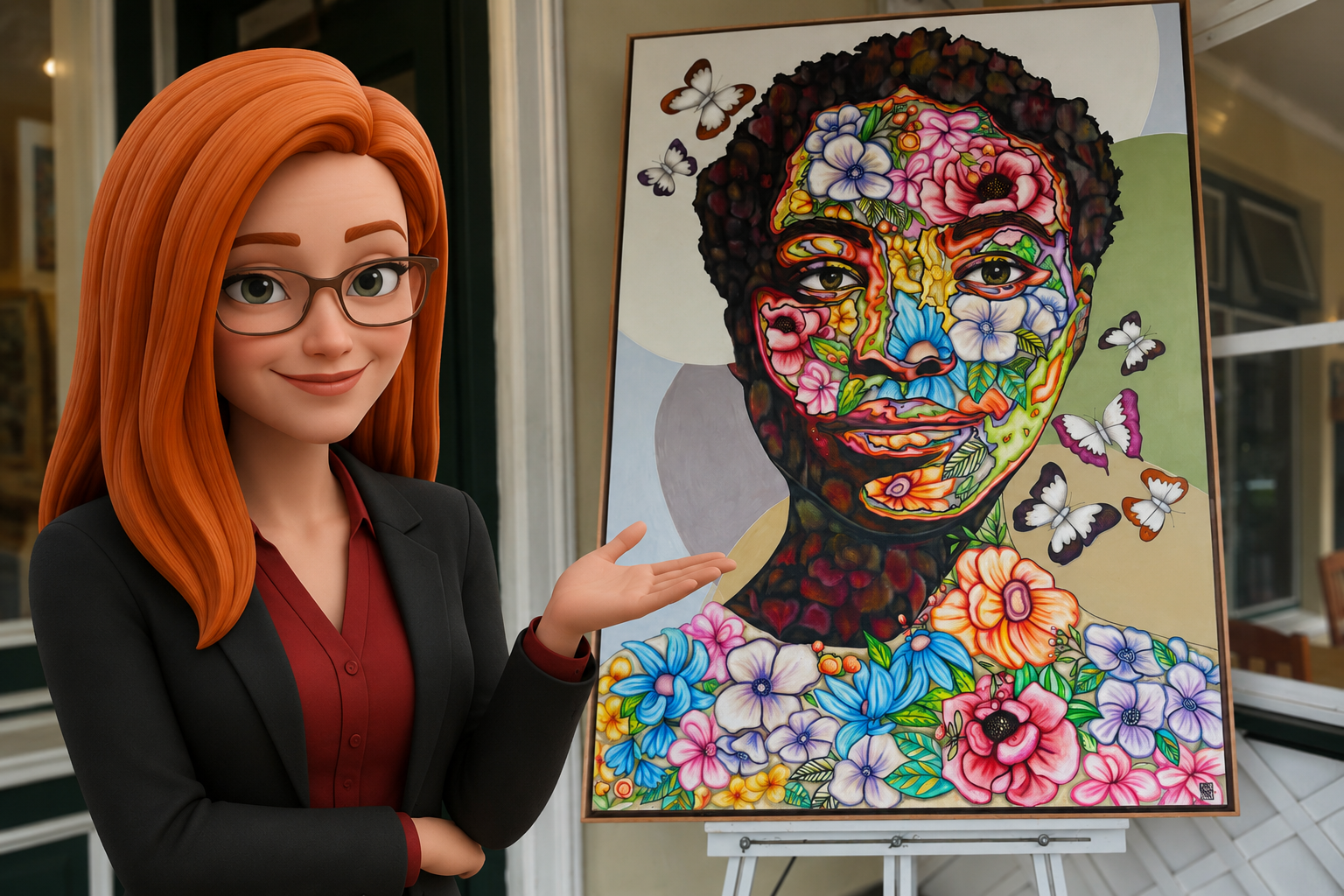
A disabled member of the community sat carving beautiful pieces of art using his feet and the only two fingers he had.
Think about that for a minute.
Many of us complain when our Wi-Fi is slow.
This man creates art with two fingers and his feet.
The village helps him because he needs help.
But here’s the part that struck me: he also helps himself.
He contributes.
He works.
He creates.
He participates.
Nobody treats him like a burden.
Nobody pretends he has nothing to offer.
The community supports him, and he does what he can to support the community in return.
It wasn’t charity.
It was belonging.
And I found myself wondering when so many of us started seeing those as different things.
Because somewhere along the way, we’ve created a culture that seems obsessed with sorting people into categories.
Taxpayers.
Freeloaders.
Makers.
Takers.
Productive.
Unproductive.
Deserving.
Undeserving.
Yet here was a village that seemed to understand something incredibly simple:
A community isn’t measured by how it treats the strongest people.
It’s measured by how it treats everyone.
The elderly.
The disabled.
The struggling.
The successful.
The people who need help today and the people who may need help tomorrow.
Everyone mattered.
Everyone contributed.
Everyone belonged.
I also learned that land in this community isn’t viewed the same way many of us view land.
Families may use it, farm it, and pass that use to future generations. But the focus isn’t on squeezing every possible dollar from it.
The focus is stewardship.
Taking care of something so it remains available for those who come after you.
Imagine that.
A society that asks, “What are we responsible for?” before asking, “What’s in it for me?”
I’m not suggesting Zimbabwe has all the answers.
No country does.
But travel has a funny way of exposing assumptions you didn’t realize you were carrying.
I arrived expecting to learn about wildlife.
Instead, I left thinking about community.
About responsibility.
About belonging.
And about whether we’ve spent so much time celebrating rugged individualism that we’ve forgotten a basic truth:
Every single one of us will need help at some point.
The real question is whether we’ve built communities that still remember how to give it.
Sometimes the most thought-provoking lessons don’t come from politicians, influencers, billionaires, or people shouting on social media.
Sometimes they come from a village chief, an artist with two fingers, and a community that never forgot that people are worth more than what they can produce.
There are places in the world that remind us how small we really are.
Pilanesberg National Park in South Africa is one of them.
Most of us spend our lives in environments designed for human convenience. Roads. Buildings. Grocery stores. Air conditioning. Traffic lights. Cell phones. Social media arguments with strangers we’ve never met.
We’ve become so accustomed to controlling our surroundings that we forget something important:
Nature never agreed to the arrangement.
The moment Scarlett entered Pilanesberg, the balance shifted.
Out here, humans are not the main characters.
The elephants don’t care about your itinerary.
The lions don’t care how much your camera cost.
The giraffes aren’t impressed by your social media following.
And the rhinoceroses certainly aren’t interested in your political opinions.
For a few hours, humans become what we actually are:
Just another species moving through the landscape.
And honestly?
It’s refreshing.
Modern life encourages us to believe everything revolves around us. Our deadlines. Our careers. Our elections. Our endless notifications. Our belief that we’re the smartest creatures to ever walk the Earth.
That last one might deserve a second look.
Scarlett’s guide, “Answer,” seemed perfectly named for the job. He had answers for nearly everything — tracks, animal behavior, where to look, when to wait, what a movement in the distance might mean.
But what made him interesting wasn’t just what he knew.
It was that he still asked questions.
Answer also talked about behavior.
Animal behavior.
Human behavior.
And the hard rule of the bush: you do not interrupt nature.
You watch.
You wait.
You respect the fact that you are not in charge.
That may sound simple, but for humans, apparently, it is advanced coursework.
It is asking us to shut up long enough to learn something.
He still watched carefully.
He still treated the landscape as something to learn from rather than something he had already figured out.
That’s a quality more humans could use.
Answer also explained the difference between white rhinos and black rhinos in the kind of plain, memorable way good guides do.
Both are rhinos.
Both are enormous.
Both could absolutely win an argument with a rental car.
But they are not the same.
White rhinos are grazers. They eat grass, keep their heads low, and are generally considered more passive.
Black rhinos are browsers. They eat leaves, shrubs, branches, and bushy plants. Some black rhinos also eat euphorbia, a plant with a toxic milky sap that most animals wisely avoid because, apparently, they have read the room.
Black rhinos, however, can tolerate it. And use it for strength and power.
Answer said that sap may be part of why black rhinos have their famously cranky reputation.
Scarlett cannot personally verify the rhino mood chemistry, and she is not about to walk up to one with a clipboard and ask follow-up questions.
But the larger point still stands.
Same family.
Different diets.
Different temperaments.
Different ways of surviving.
Nature, once again, refusing to fit neatly into human categories.
At one point, someone in the jeep couldn’t resist making the obvious comparison.
White rhinos.
Black rhinos.
Humans being humans, the conversation briefly drifted toward people.
Answer tilted his head, smiled, and seemed to acknowledge the comparison without fully taking the bait.
Because the interesting part wasn’t their color.
The interesting part was that they were different.
Different diets.
Different temperaments.
Different ways of moving through the world.
And yet somehow they managed to share the same park without spending all day obsessing over those differences.
The white rhinos weren’t demanding the black rhinos change.
The black rhinos weren’t campaigning against the white rhinos.
Neither group appeared particularly interested in convincing the other group that they were doing rhinoceros life incorrectly.
They simply existed.
Meanwhile, humans — allegedly the most intelligent species on Earth — have spent an astonishing amount of time finding reasons to divide ourselves into teams and then arguing about which team matters most.
Standing in Pilanesberg, surrounded by animals that seemed perfectly capable of adapting to one another’s existence, Scarlett found herself wondering whether intelligence and wisdom are two very different things.
The more Scarlett watched the animals, the more that thought kept creeping in.
For creatures we proudly describe as “wild,” they seemed surprisingly good at coexistence.
The zebras knew where the zebras belonged.
The giraffes knew where the giraffes belonged.
The elephants understood their role.
The lions understood theirs.
Nobody was demanding exclusive ownership of the watering hole.
Nobody was launching a disinformation campaign against antelope.
Nobody was trying to convince everyone else that the real problem facing the Mankwe River was a neighboring species simply existing.
Humans, meanwhile, have the internet and still can’t manage most of that.
Perhaps intelligence and wisdom aren’t exactly the same thing.
Travel has a way of teaching lessons you didn’t know you needed.
Sometimes those lessons come from museums.
Sometimes they come from conversations.
And sometimes they come from watching animals who have been adapting to their environment for thousands of years while humans spend their afternoons arguing about things that won’t matter next week.
A herd of elephants crosses a road.
A giraffe quietly reaches into a tree.
A rhino continues eating exactly what a rhino has evolved to eat.
No committee meeting required.
No strategic plan.
No opinion poll.
No billionaire funding a misinformation campaign.
Just life.
Pilanesberg is often promoted as a safari destination, and it absolutely is one.
But the wildlife isn’t what stayed with Scarlett.
What stayed with her was the perspective.
The reminder that the world is bigger than us.
Older than us.
And far less interested in our drama than we imagine.
The animals seemed perfectly content getting on with the business of survival.
Humans, on the other hand, appear determined to complicate absolutely everything.
After spending time in Pilanesberg, Scarlett wasn’t entirely convinced we’re the more adaptable species.
We’ve built remarkable things.
We’ve walked on the moon.
We’ve mapped the human genome.
We’ve invented artificial intelligence.
And yet a group of rhinos with different diets and different personalities somehow manage to share a national park without creating a constitutional crisis.
Maybe there’s a lesson in that.
Maybe the smartest thing humans could do once in a while is stop talking, start observing, and remember that the world doesn’t revolve around us.
Pilanesberg has been teaching that lesson for a very long time.
America has done some genuinely impressive things.
Sent people to the moon. Built the internet. Developed life-saving vaccines. Invented approximately 9,000 ways to order coffee.
And yet, somehow, this same country keeps melting down over public bathrooms.
Scarlett would like everyone to take a breath.
Not a press-conference breath. Not a “concerned parent group funded by suspiciously well-organized political operatives” breath. A normal human breath.
Because this is still, unfortunately, a national conversation:
Who gets to pee where?
That’s it. That’s the grand moral crisis.
Not poverty. Not gun violence. Not healthcare. Not underfunded schools. Not people working full-time and still unable to afford rent.
Nope.
Toilets.
Bathrooms have become one of America’s favorite culture-war battlegrounds because they are useful. Not useful to ordinary people, obviously. Ordinary people use bathrooms for the same reason everyone else does: to get in, do what needs to be done, wash their hands — hopefully — and leave.
But politically? Bathrooms are very useful.
They let people turn fear into policy.
They let politicians pretend they are “protecting children” while doing very little about the things actually harming children.
They let cable news hosts fill hours of programming with outrage over a public facility nobody wanted to spend time in anyway.
And they let people avoid the harder question:
Why are some Americans so invested in controlling who is allowed to exist comfortably in public?
Because that is what this is really about.
It is not about bathrooms.
It is about permission.
Permission to be seen. Permission to move through the world. Permission to use a public space without being treated like a threat, a debate topic, or a political prop.
Transgender people are not lurking in stalls plotting the downfall of civilization. They are people. They are students, coworkers, neighbors, travelers, parents, friends, and strangers trying to get through the day like everyone else.
The panic depends on making them sound mysterious and dangerous.
Reality is much less dramatic.
Most people have probably shared bathrooms with transgender people many times and never noticed. Because, shocking as this may be to the professional outrage industry, most people in public bathrooms are not conducting identity investigations between stalls.
They are trying not to touch the door handle.
Scarlett has traveled enough to know that many places manage this issue with far less hysteria. Gender-neutral bathrooms exist. Family bathrooms exist. Single-stall bathrooms exist. Shared public facilities exist. Somehow, society continues.
No thunderbolt. No collapse of civilization. No emergency alert from the Ministry of Toilet Morality.
Just people using the bathroom.
Imagine that.
The American obsession with bathroom policing says less about safety and more about discomfort with change. Some people want the world sorted into clean little boxes: blue, pink, male, female, normal, not normal, acceptable, suspicious.
But human beings have never been that tidy.
And trying to force everyone into those boxes does not create safety.
It creates fear.
It tells certain people they are always being watched. Always being judged. Always one complaint away from public humiliation.
That is not protection.
That is control.
Meanwhile, the country has real problems stacked to the ceiling. Housing costs are brutal. Healthcare is a mess. Schools need funding. Climate disasters are getting worse. Families are exhausted. Workers are stretched thin. Communities are struggling.
But sure, let’s gather everyone around the national campfire and scream about restroom signage.
Very serious country, apparently.
Scarlett is not saying public spaces should not be safe. Of course they should.
She is saying safety should be based on actual risk, not manufactured panic. It should protect people from harm, not single out vulnerable groups so politicians can score points with people who have been trained to fear them.
Because that is the ugliest part of this whole thing.
The bathroom panic is not happening in a vacuum. It is part of a larger pattern: find a marginalized group, exaggerate the threat, demand laws, claim moral victory, repeat.
Different decade, different target, same tired machinery.
And honestly?
America should be embarrassed.
Not because people disagree. Democracies are built for disagreement.
America should be embarrassed because this is what passes for leadership in too many places: adults in suits writing laws about bathrooms while ignoring the collapsing systems right in front of them.
Scarlett has one humble suggestion.
Let people pee in peace.
Then maybe we can get back to solving problems that actually require more than a bathroom sign and a little basic human decency.
Scarlett says no to the Great American Bathroom Panic.
Contains information related to marketing campaigns of the user. These are shared with Google AdWords / Google Ads when the Google Ads and Google Analytics accounts are linked together.
90 days
__utma
ID used to identify users and sessions
2 years after last activity
__utmt
Used to monitor number of Google Analytics server requests
10 minutes
__utmb
Used to distinguish new sessions and visits. This cookie is set when the GA.js javascript library is loaded and there is no existing __utmb cookie. The cookie is updated every time data is sent to the Google Analytics server.
30 minutes after last activity
__utmc
Used only with old Urchin versions of Google Analytics and not with GA.js. Was used to distinguish between new sessions and visits at the end of a session.
End of session (browser)
__utmz
Contains information about the traffic source or campaign that directed user to the website. The cookie is set when the GA.js javascript is loaded and updated when data is sent to the Google Anaytics server
6 months after last activity
__utmv
Contains custom information set by the web developer via the _setCustomVar method in Google Analytics. This cookie is updated every time new data is sent to the Google Analytics server.
2 years after last activity
__utmx
Used to determine whether a user is included in an A / B or Multivariate test.
18 months
_ga
ID used to identify users
2 years
_gali
Used by Google Analytics to determine which links on a page are being clicked
30 seconds
_ga_
ID used to identify users
2 years
_gid
ID used to identify users for 24 hours after last activity
24 hours
_gat
Used to monitor number of Google Analytics server requests when using Google Tag Manager