Category: Human Rights

  • They didn’t change the laws, they changed the words.

    They didn’t change the laws, they changed the words.

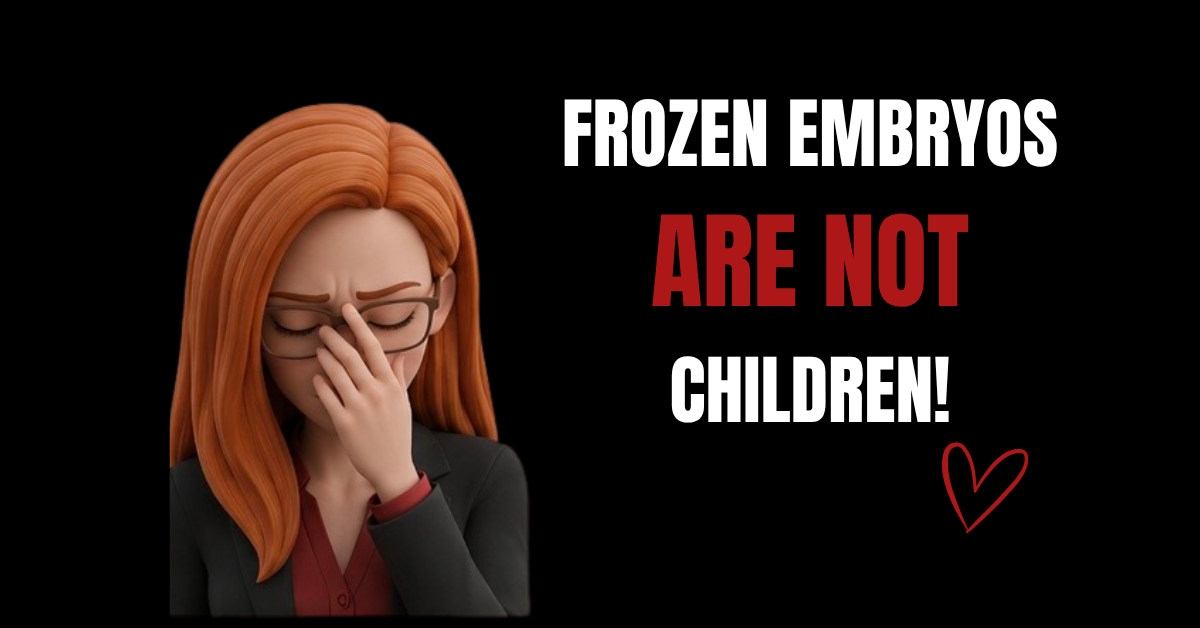
    How “embryo adoption” became the next step to personhood.

    They learned something after Roe v. Wade was overturned.

    If you tell people exactly what you’re trying to do, they push back.

    So now they call it something people won’t question.

    “Embryo adoption.”

    It sounds compassionate.

    Who could possibly be against helping families?

    That’s exactly why the name matters.

    The Trump administration is using federal dollars to support an Embryo Adoption Program. On the surface, it sounds like another fertility program.

    It isn’t.

    The entire premise is that frozen embryos should be treated as children waiting to be adopted.

    Read that again.

    Not potential life.

    Not embryos stored in a fertility clinic.

    Children.

    That isn’t just a wording choice.

    It’s a legal argument.

    For years, anti-abortion organizations have been working toward one goal: fetal personhood. The idea is simple. If legal personhood begins the moment an egg is fertilized, then every fertilized embryo has the legal rights of a child.

    Once you accept that idea, everything else starts to change.

    If a frozen embryo is a child, what happens to IVF clinics that routinely create multiple embryos?

    What happens when embryos are tested for genetic conditions?

    What happens when unused embryos are discarded because the family has completed treatment?

    And what happens to emergency contraception or other birth control methods that opponents argue could affect a fertilized egg, even when medical evidence says they primarily work by preventing ovulation?

    These aren’t hypothetical questions.

    They’re the legal consequences of redefining when personhood begins.

    Notice what’s missing from the conversation.

    Nobody asked the American people whether frozen embryos should have the same legal status as children.

    Nobody voted on it.

    Congress didn’t debate it.

    Instead, the language is changing first.

    Because language shapes law.

    If government agencies start describing frozen embryos as children in grant programs, policy documents, and official guidance, that language doesn’t stay there forever. It becomes part of the legal foundation for future court cases, legislation, and regulatory decisions.

    Support IVF if you want.

    Oppose abortion if you want.

    Those are debates reasonable people can have.

    But every American should be paying attention when the federal government quietly starts redefining personhood one policy at a time.

    This isn’t just about helping families have children.

    It’s about changing what the government believes a child already is.

    And once that definition changes, the consequences won’t stop at abortion.

    Scarlett says no.

  • When Did Belonging Become a Competition?

    When Did Belonging Become a Competition?

    America teaches children to scream “we’re number one” before it teaches them how to belong.

    What in the flip?

    Be the best.

    Beat the rest.

    Win the game.

    Make the team.

    Get the trophy.

    Get picked.

    Get ranked.

    Get ahead.

    And then we act shocked when people grow up believing their worth depends on being chosen.

    Scarlett loves effort. She loves excellence. She loves watching people push themselves and discover what they’re capable of.

    But there is a difference between encouraging people to grow and teaching them that second place means second-class.

    That is where the damage starts.

    Because here’s what is not on the pep rally banner —

    Most people will not be number one.

    Most kids will not be the star athlete.

    Most students will not be valedictorian.

    Most workers will not be the top producer.

    Most people will spend their lives doing ordinary, necessary, beautiful things that hold families, workplaces, neighborhoods, schools, and communities together.

    And somehow we teach them to feel like that is not enough.

    That is the part Scarlett cannot stand.

    Not everyone wants to be famous.

    Not everyone wants to dominate.

    Not everyone wants to crush the competition.

    Some people just want to belong.

    They want to be included.

    They want to be needed.

    They want to know they matter even when they are not winning, performing, producing, ranking, proving, and auditioning for basic human worth.

    And honestly?

    That should not be a radical request.

    The world does not run because everyone is the best.

    It runs because people show up.

    They help.

    They teach.

    They coach.

    They clean.

    They drive.

    They listen.

    They organize.

    They care.

    They stay.

    Competition has its place.

    But when a culture worships winning too much, it starts treating belonging like something people have to earn.

    You belong if you win.

    You belong if you stand out.

    You belong if someone chooses you.

    No.

    People need belonging before they can become their best.

    Not after.

    Scarlett says no to a world where everyone is taught to climb over each other just to feel worthy.

    Maybe the better question is not “are you number one?”

    Maybe it is this —

    Are the people around you glad you are on the team?

  • They Want June Cleaver Back

    They Want June Cleaver Back

    Women Remember the Fine Print.

    Every time women’s rights come up, somebody starts romanticizing the past.

    They want June Cleaver back.

    And Donna Reed.

    And Harriet Nelson.

    And every perfectly dressed television mother who smiled in a spotless kitchen while dinner magically appeared, children behaved, and nobody talked about money, fear, abuse, depression, alcoholism, infidelity, or what happened when the front door closed.

    Later came Carol Brady, Marion Cunningham, and a dozen other television versions of the ideal American family.

    The message was always the same:

    This is what a good woman looks like.

    Smile.

    Serve.

    Sacrifice.

    Don’t complain.

    Don’t ask for too much.

    And whatever you do, don’t make anyone uncomfortable by wanting more.

    The problem?

    Most of it was fantasy.

    Television sold America an image.

    Real women lived something very different.

    Women couldn’t get a credit card in their own name.

    Women couldn’t easily get a mortgage.

    Women often couldn’t build independent credit.

    Women had fewer career opportunities.

    Women frequently stayed in bad marriages because leaving meant financial disaster.

    June Cleaver never had to wonder how she would support herself if Ward left.

    The script never asked that question.

    Real women did.

    That’s why I roll my eyes every time someone talks about going back to “traditional values.”

    Traditional for whom?

    Because what some people call traditional values often looks suspiciously like traditional dependence.

    Women have spent generations fighting for rights men never had to fight for.

    The right to vote.

    The right to own property.

    The right to build credit.

    The right to have careers.

    The right to serve in the military.

    The right to control their own financial future.

    Not because women wanted special treatment.

    Because women wanted access to opportunities that men already had.

    And now we’re watching a military ceremony honoring women veterans get canceled.

    A ceremony recognizing women who volunteered, served, sacrificed, deployed, led, and defended this country.

    Women who earned that recognition.

    Women who earned that respect.

    Women who shouldn’t have to keep proving their value every single generation.

    That’s what bothers me.

    Women raise families.

    Women build careers.

    Women care for aging parents.

    Women volunteer.

    Women run businesses.

    Women serve their communities.

    Women serve their country.

    Women keep entire households functioning while carrying mental loads that would break most people.

    Then society turns around and asks whether women have contributed enough to deserve recognition.

    ENOUGH!

    Women are not a diversity initiative.

    Women are not a special interest group.

    Women are half the population.

    We’ve spent centuries helping build this country while fighting for rights that many men received simply by being born.

    Forgive us if we’re not interested in going backward.

    Scarlett says no.


  • Children With Disabilities Are Not Paperwork

    Children With Disabilities Are Not Paperwork

    The Trump administration is moving special education oversight out of the Department of Education and into Health and Human Services.

    Supporters call it reorganization.

    Parents call it something else.

    Because when a child needs help, the question is not which federal agency handles the paperwork.

    The question is whether that child gets the services they need.

    And that is where Scarlett gets pissed.

    Scarlett has a granddaughter on the autism spectrum.

    She does not know exactly what support her granddaughter will need as she grows.

    She does not know what challenges she will face.

    But she knows this:

    Her granddaughter deserves every opportunity to become whoever she is capable of becoming.

    And that opportunity should not depend on how much money her parents have.

    Because here is the ugly truth nobody wants to talk about:

    When public support systems are weakened, wealthy families still find a way.

    They hire specialists.

    They pay for private evaluations.

    They pay for tutors.

    They pay for therapies.

    They pay for advocates.

    They pay for private schools designed specifically for children with additional needs.

    Someone close to Scarlett has a grandson who requires specialized educational support. His parents are fortunate enough to afford a private school designed to meet those needs.

    Good.

    Every child deserves that kind of support.

    But what about the families who cannot write those checks?

    What about the single mother working two jobs?

    What about the grandparents raising grandchildren?

    What about the parents already choosing between rent, groceries, prescriptions, and gas?

    What happens to their children?

    Because those children deserve the same opportunity to succeed.

    Scarlett’s own children benefited from IEPs and educational support because ADHD was part of their family’s story.

    And yes, Scarlett knows exactly what some people are thinking.

    ADHD?

    Scarlett?

    No.

    Surely not the woman with a demanding full-time job, a real life outside of Scarleting, 47 tabs open, three causes on fire, a missing password, a half-written post, an unanswered text, laundry judging her from the corner, and a sudden urgent need to reorganize a website menu at midnight.

    Shocking.

    But when Scarlett was a kid, nobody knew what the heck ADHD was.

    There were no IEP meetings.

    There were no accommodations.

    There were no conversations about executive functioning, learning differences, or how smart kids can still struggle.

    There was “sit still.”

    There was “pay attention.”

    There was “try harder.”

    And in Catholic school, there was sometimes a yardstick.

    Scarlett is not romanticizing that. She is condemning it.

    Because a lot of children were punished for things adults did not understand, did not support, or did not want to deal with.

    Scarlett still remembers getting whacked across the knees because her skirt was a little too short.

    Every Friday for most of seventh and all of eighth grade.

    The crime?

    Having a skirt that was more than 3 inches above her knee.

    The culprit?

    According to the school, the child wearing the uniform.

    Not the parent who bought it.

    Not the family budget.

    Not the fact that children have the audacity to grow.

    The child.

    Ah yes.

    The educational philosophy of the era seemed to be: when in doubt, blame the kid.

    That was not discipline.

    That was adults taking their frustration, control, and ignorance out on a child.

    And yes, here is another hidden connection to Scarlett’s abortion article.

    Because this is the same pattern.

    Force the birth.

    Police the child.

    Punish the parent.

    Ignore the poverty.

    Blame the kid.

    Then act shocked when people say the system was never really pro-life at all.

    Children are not born into equal circumstances.

    Some are born into families with money, time, advocates, access, transportation, flexibility, private specialists, and backup plans.

    Others are born into families doing the absolute best they can while barely keeping the lights on.

    That child’s future should not depend on which family they got dropped into.

    That is why special education matters.

    That is why IEPs matter.

    That is why public schools matter.

    That is why federal protections matter.

    That is why Federal Pell Grants matter. Or better yet, some form of universal secondary education.

    Because support does not make a child less capable.

    It helps the world finally see what was already there.

    Scarlett’s children didn’t succeed because someone lowered the bar.

    They succeeded because someone finally understood what they needed to clear it.

    And they succeeded because they had a mother in their corner.

    A mother who believed in them.

    A mother who pushed for them.

    A mother who sat through meetings, asked questions, challenged decisions, and occasionally became a royal pain in the ass when she thought someone was overlooking her kids.

    A mother who sometimes fought battles for them that, looking back, she probably should have let them fight themselves.

    But when you are a parent and you see your child struggling, you do not always get that balance right.

    You just fight.

    Because children need systems that work.

    But they also need adults who will fight like hell when those systems don’t.

    And if we make it harder for families to access services, harder to enforce protections, and harder to hold schools accountable, the children who suffer will not be the wealthy ones.

    The wealthy will find another option.

    The children who suffer will be the ones whose families do not have one.

    Children with disabilities are not paperwork.

    They are not budget items.

    They are not political talking points.

    They are children.

    And they deserve better than this.

    Scarlett says no.
  • Scarlett’s Granddaughters Have Fewer Rights Than She Did

    Scarlett’s Granddaughters Have Fewer Rights Than She Did

    Every now and then, Scarlett wonders where she would be today if she had not had an abortion in her 20s.

    Not because she regrets it.

    Not because she is looking for forgiveness.

    And certainly not because she owes strangers an explanation.

    She wonders because one decision can change the entire direction of a life.

    A different job.

    A different city.

    Different relationships.

    Different opportunities.

    Maybe different children.

    Maybe a completely different version of Scarlett.

    She will never know.

    That is the thing about life.

    You only get to live one version of it.

    The loudest people in the abortion debate always seem convinced they know exactly what would have happened.

    They do not.

    Neither does Scarlett.

    Maybe her life would have been better.

    Maybe it would have been harder.

    Maybe both.

    If Scarlett is being honest, she believes she made the right decision.

    More than that, she believes her life was better because she made it.

    She believes her family’s life was better because she made it.

    The opportunities she had.

    The people she loved.

    The children she eventually raised.

    The grandchildren she adores.

    None of it exists exactly as it does today without that choice.

    But certainty is a funny thing.

    Because Scarlett will never know.

    There is no alternate universe she can visit.

    No second life she can compare against this one.

    Only the life she lived.

    The one she built.

    The one she (mostly) loves.

    And the one she was free to choose.

    But she knows one thing for certain:

    The decision was hers.

    And that matters.

    While Scarlett was a child, abortion became legal.

    Women before her fought for that right.

    Not because they loved abortion.

    Not because they celebrated it.

    Not because they wanted anyone to have one.

    They fought because they understood something painfully basic:

    A woman should own her own future.

    She should decide whether she is ready.

    She should decide what risks she is willing to take.

    She should decide what path her life follows.

    Not politicians.

    Not judges.

    Not preachers.

    Not strangers.

    Her.

    By the time Scarlett was old enough to face that decision, that right existed.

    When one of the biggest crossroads of her life arrived, Scarlett was allowed to choose.

    Today, Scarlett’s granddaughters have fewer rights than she did.

    After decades of progress.

    Scarlett’s GRANDDAUGHTERS have fewer rights than she did.

    After generations of women fought, marched, voted, organized, argued, and sacrificed.

    SCARLETT’S GRANDDAUGHTERS HAVE FEWER RIGHTS THAN SHE DID.

    We are now debating whether young women deserve the same freedom their grandmothers had.

    What in the flip kind of progress is that?

    And before anyone says, “Well, adoption is always an option,” Scarlett would like a word.

    She was adopted.

    So yes, she knows adoption can be a beautiful answer.

    Scarlett had a classmate who was also adopted.  That friend’s parents told her she was chosen.

    Chosen.

    They said it so she would know she was loved.

    Wanted.

    Welcomed.

    That is one version of adoption.

    Scarlett had another.

    When her mother was angry about whatever normal childhood behavior had pushed the wrong button that day, she would remind Scarlett she should be grateful to have a roof over her head.

    Grateful she was not in foster care.  Grateful for private school.  Just flipping grateful.

    Imagine being a child and learning that love could come with a bill.

    Imagine learning that shelter could be used as a weapon.

    Imagine learning that belonging could be conditional if you were inconvenient enough.

    So please spare Scarlett the neat little adoption speeches.

    Adoption may be an answer.

    It is not the answer.

    Not for every woman.

    Not for every pregnancy.

    Not for every child.

    Not for every life.

    The people shouting “just put the baby up for adoption” are usually not volunteering to carry the pregnancy, endure the birth, navigate the trauma, pay the bills, or live with the consequences.

    Imagine.

    You do not have to agree with Scarlett’s decision.

    That was never the point.

    The point is that it was hers.

    No politician knew her circumstances.

    No judge knew her fears.

    No activist knew her future.

    And none of them had to live with the consequences.

    Scarlett did.

    That is what freedom means.

    The right to make profoundly personal decisions for yourself.

    The right to succeed because of them.

    The right to struggle because of them.

    The right to own them.

    So yes, Scarlett sometimes thinks about the life she did not live.

    But she spends a lot more time thinking about the young women whose futures are being decided by people they will never meet.

    And that makes her angry.

    Because every woman deserves ownership of her own future.

    Scarlett had that right.

    Our granddaughters should have it too.

    Scarlett says no.

  • Everyone Thinks Disability Is Something That Happens to Other People

    Everyone Thinks Disability Is Something That Happens to Other People

    Until it happens to them.

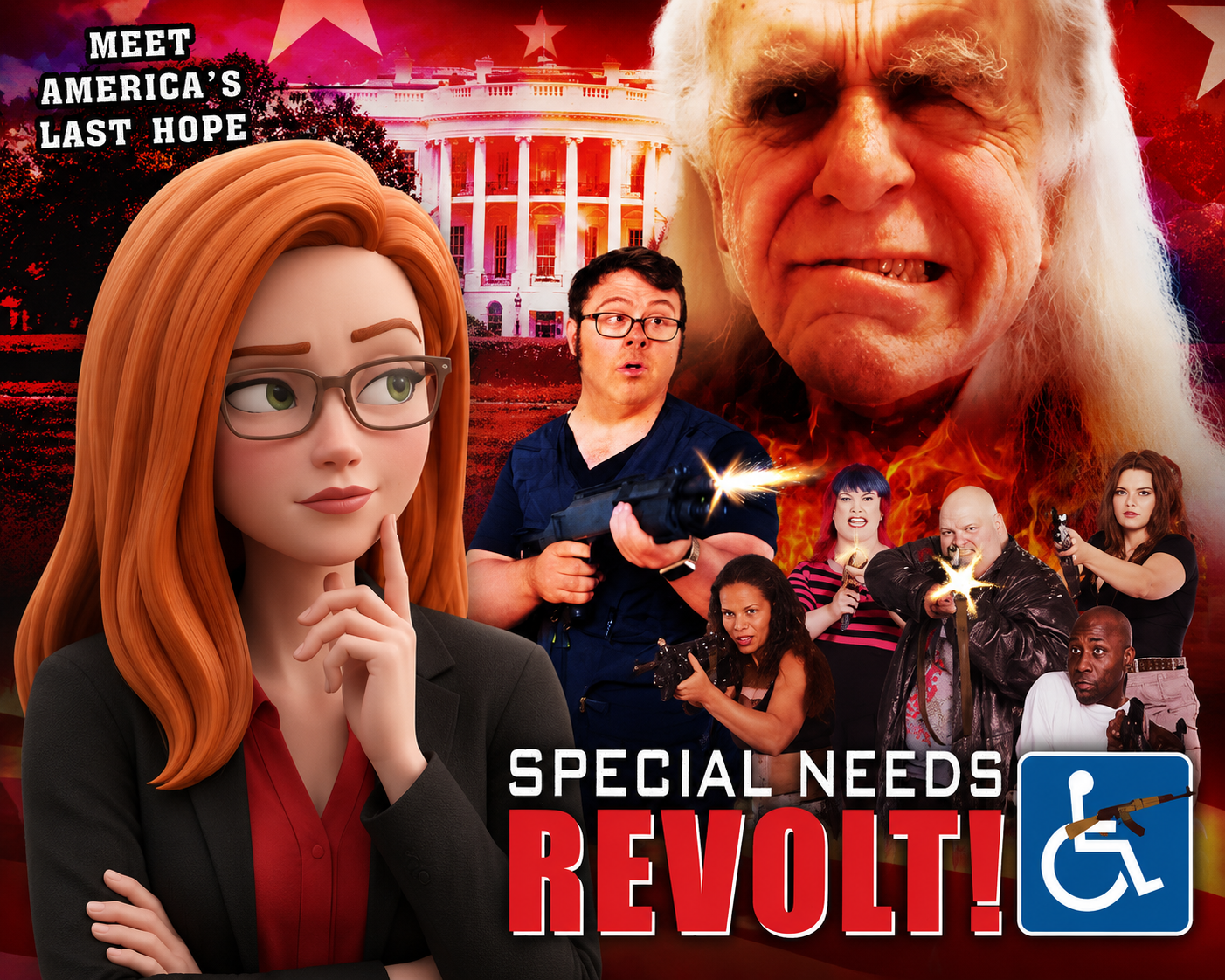
    A relatively new independent film called Special Needs Revolt! imagines a future where people with disabilities are stripped of their rights and pushed to the margins of society.

    It’s satire.

    It’s fiction.

    It’s exaggerated.

    At least that’s what we’d like to think.

    Because history suggests something else.

    History suggests that every generation finds a group of people it is comfortable underestimating.

    People it decides are less capable.

    Less valuable.

    Less deserving of a voice.

    And history also suggests those groups eventually get tired of it.

    What struck me about this movie isn’t the plot.

    It’s the assumption underneath it.

    The assumption that disability belongs to someone else.

    Some other family.

    Some other neighborhood.

    Some other life.

    But disability isn’t a niche issue.

    It’s one of the few communities that almost anyone can join at any time.

    A car accident.

    A stroke.

    A cancer diagnosis.

    A traumatic brain injury.

    A child born with different needs.

    A parent developing dementia.

    Enough birthdays.

    That’s it.

    Welcome to the club.

    Which is why I’ve never understood why we talk about disability as if it affects only a small group of people.

    It affects all of us.

    Directly.

    Indirectly.

    Today.

    Or eventually.

    And yet society still tends to measure people by what they can’t do instead of what they can.

    We see a wheelchair before we see a person.

    A diagnosis before we see talent.

    A limitation before we see potential.

    That’s not a disability problem.

    That’s a perspective problem.

    I’ve met people with disabilities who contribute more to their communities than people with every advantage imaginable.

    I’ve also met perfectly healthy people who spend their lives convincing themselves that other people are the problem.

    The difference isn’t ability.

    It’s opportunity.

    It’s inclusion.

    It’s whether someone was given the chance to participate in the first place.

    That’s why stories like Special Needs Revolt! matter.

    Not because they’re comfortable.

    Because they’re uncomfortable.

    They force us to ask who gets included.

    Who gets heard.

    Who gets ignored.

    And who gets underestimated.

    Personally, I’ve learned that underestimating people is almost always a mistake.

    Especially when society has been doing it for generations.

    Scarlett says no.

    To writing people off.

    To defining people by a diagnosis.

    And to pretending disability is somebody else’s issue.

  • The Great American Bathroom Panic

    The Great American Bathroom Panic

    When a Country Loses Its Mind Over Toilets

    America has done some genuinely impressive things.

    Sent people to the moon. Built the internet. Developed life-saving vaccines. Invented approximately 9,000 ways to order coffee.

    And yet, somehow, this same country keeps melting down over public bathrooms.

    Scarlett would like everyone to take a breath.

    Not a press-conference breath. Not a “concerned parent group funded by suspiciously well-organized political operatives” breath. A normal human breath.

    Because this is still, unfortunately, a national conversation:

    Who gets to pee where?

    That’s it. That’s the grand moral crisis.

    Not poverty. Not gun violence. Not healthcare. Not underfunded schools. Not people working full-time and still unable to afford rent.

    Nope.

    Toilets.

    Bathrooms have become one of America’s favorite culture-war battlegrounds because they are useful. Not useful to ordinary people, obviously. Ordinary people use bathrooms for the same reason everyone else does: to get in, do what needs to be done, wash their hands — hopefully — and leave.

    But politically? Bathrooms are very useful.

    They let people turn fear into policy.

    They let politicians pretend they are “protecting children” while doing very little about the things actually harming children.

    They let cable news hosts fill hours of programming with outrage over a public facility nobody wanted to spend time in anyway.

    And they let people avoid the harder question:

    Why are some Americans so invested in controlling who is allowed to exist comfortably in public?

    Because that is what this is really about.

    It is not about bathrooms.

    It is about permission.

    Permission to be seen. Permission to move through the world. Permission to use a public space without being treated like a threat, a debate topic, or a political prop.

    Transgender people are not lurking in stalls plotting the downfall of civilization. They are people. They are students, coworkers, neighbors, travelers, parents, friends, and strangers trying to get through the day like everyone else.

    The panic depends on making them sound mysterious and dangerous.

    Reality is much less dramatic.

    Most people have probably shared bathrooms with transgender people many times and never noticed. Because, shocking as this may be to the professional outrage industry, most people in public bathrooms are not conducting identity investigations between stalls.

    They are trying not to touch the door handle.

    Scarlett has traveled enough to know that many places manage this issue with far less hysteria. Gender-neutral bathrooms exist. Family bathrooms exist. Single-stall bathrooms exist. Shared public facilities exist. Somehow, society continues.

    No thunderbolt. No collapse of civilization. No emergency alert from the Ministry of Toilet Morality.

    Just people using the bathroom.

    Imagine that.

    The American obsession with bathroom policing says less about safety and more about discomfort with change. Some people want the world sorted into clean little boxes: blue, pink, male, female, normal, not normal, acceptable, suspicious.

    But human beings have never been that tidy.

    And trying to force everyone into those boxes does not create safety.

    It creates fear.

    It tells certain people they are always being watched. Always being judged. Always one complaint away from public humiliation.

    That is not protection.

    That is control.

    Meanwhile, the country has real problems stacked to the ceiling. Housing costs are brutal. Healthcare is a mess. Schools need funding. Climate disasters are getting worse. Families are exhausted. Workers are stretched thin. Communities are struggling.

    But sure, let’s gather everyone around the national campfire and scream about restroom signage.

    Very serious country, apparently.

    Scarlett is not saying public spaces should not be safe. Of course they should.

    She is saying safety should be based on actual risk, not manufactured panic. It should protect people from harm, not single out vulnerable groups so politicians can score points with people who have been trained to fear them.

    Because that is the ugliest part of this whole thing.

    The bathroom panic is not happening in a vacuum. It is part of a larger pattern: find a marginalized group, exaggerate the threat, demand laws, claim moral victory, repeat.

    Different decade, different target, same tired machinery.

    And honestly?

    America should be embarrassed.

    Not because people disagree. Democracies are built for disagreement.

    America should be embarrassed because this is what passes for leadership in too many places: adults in suits writing laws about bathrooms while ignoring the collapsing systems right in front of them.

    Scarlett has one humble suggestion.

    Let people pee in peace.

    Then maybe we can get back to solving problems that actually require more than a bathroom sign and a little basic human decency.

    Scarlett says no to the Great American Bathroom Panic.

  • Two Bad Voting Ideas. One Very Obvious Goal.

    Two Bad Voting Ideas. One Very Obvious Goal.

    There are two different ideas being floated here, and both are bad.

    They are not exactly the same.

    They are just bad in different ways.

    Bad Idea #1: “One Household, One Vote”

    This is the idea that a household should vote as one unit.

    Sounds cozy, right?

    A family meeting. A dinner-table discussion. A little civic togetherness.

    Except households are not governments.

    Households are made up of individual people with individual rights.

    A wife does not lose her political voice because she got married.

    An adult child living at home does not become a footnote.

    A grandmother in the guest room does not get absorbed into someone else’s ballot.

    And let’s not pretend we don’t know how this usually works.

    The “household vote” almost always points back to the old “head of household” model — meaning one person gets treated like the decision-maker, and everyone else gets told to be agreeable.

    That is not democracy.

    That is disenfranchisement with curtains.

    Bad Idea #2: The “Family Vote”

    This one is different.

    The “family vote” says parents should get extra voting power because they have children.

    So instead of one adult, one vote, parents would also vote on behalf of their kids.

    A couple with four children could potentially have six votes.

    A single adult gets one.

    A childless couple gets two.

    An infertile couple gets two.

    A retiree gets one.

    A young worker gets one.

    A person caring for aging parents gets no extra votes.

    See the problem?

    This does not give children a voice.

    It gives parents more power.

    Children are not filling out ballots.

    Children are not weighing tax policy, reproductive rights, education funding, foreign policy, healthcare, climate policy, or Supreme Court appointments.

    Their parents are.

    And parents already vote with their children’s futures in mind if they choose to.

    They do not need bonus ballots.

    The Real Problem

    Both ideas attack the same basic principle:

    One person. One vote.

    Not one household.

    Not one family unit.

    Not one adult plus bonus votes for dependents.

    Citizenship is not supposed to be weighted by marriage, fertility, household structure, religion, income, or whether someone has reproduced.

    Because the second we start saying some citizens deserve more political power than others, we are no longer protecting democracy.

    We are redesigning it for the people who already want control.

    And somehow, the people pushing these ideas always seem very confident they will be the ones holding the extra votes.

    Funny how that works.

    Scarlett says no thank you.

  • The Billionaire and the Predator.

    The Billionaire and the Predator.

    Bill Gates told Congress Jeffrey Epstein tried to blackmail him over an affair.

    And somehow we are still supposed to pretend the real scandal is “poor judgment.”

    No.

    This was not a confusing social mix-up at a charity luncheon.

    Gates knew Epstein had been convicted of sex crimes. He kept meeting with him anyway because Epstein supposedly had access to rich donors.

    There it is.

    A convicted sex offender became acceptable because he was useful.

    Gates denies criminal wrongdoing, says he never went to Epstein’s island or homes, and called the whole thing a “grave error in judgment.”

    Fine.

    But his name reportedly appears more than 3,000 times in Epstein-related federal records.

    That is not “oops.”

    That is “open the damn transcript.”

    The survivors deserve answers. The public deserves answers. And billionaires do not get a special privacy curtain when the subject is a child sex trafficker and the people around him.

    Scarlett says no.