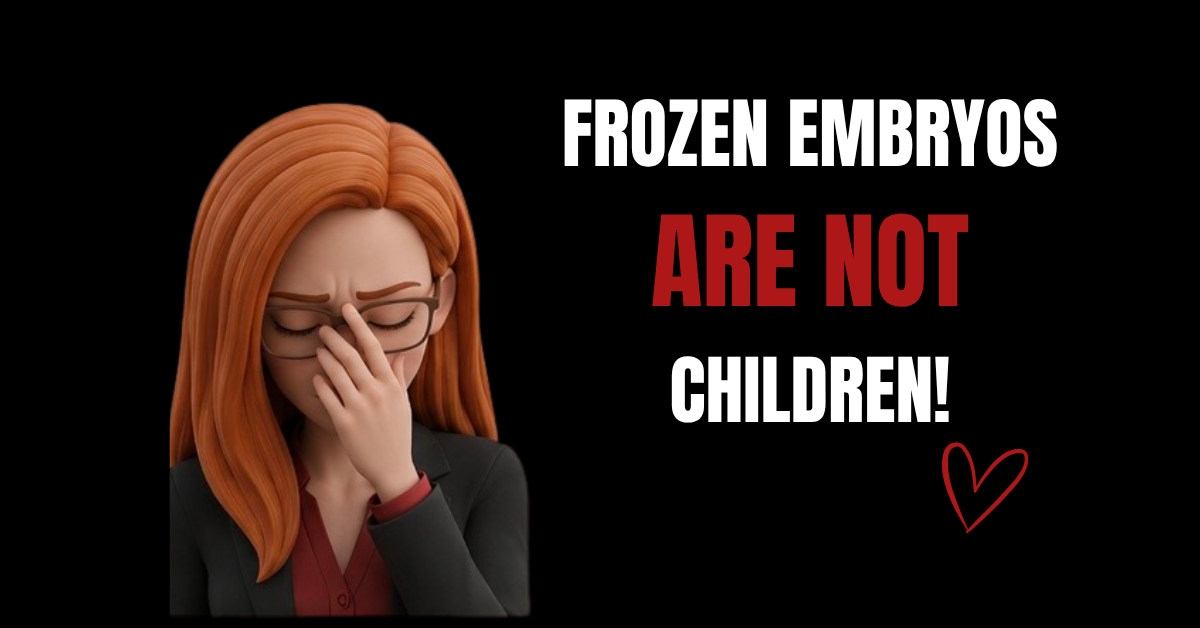
How “embryo adoption” became the next step to personhood.
They learned something after Roe v. Wade was overturned.
If you tell people exactly what you’re trying to do, they push back.
So now they call it something people won’t question.
“Embryo adoption.”
It sounds compassionate.
Who could possibly be against helping families?
That’s exactly why the name matters.
The Trump administration is using federal dollars to support an Embryo Adoption Program. On the surface, it sounds like another fertility program.
It isn’t.
The entire premise is that frozen embryos should be treated as children waiting to be adopted.
Read that again.
Not potential life.
Not embryos stored in a fertility clinic.
Children.
That isn’t just a wording choice.
It’s a legal argument.
For years, anti-abortion organizations have been working toward one goal: fetal personhood. The idea is simple. If legal personhood begins the moment an egg is fertilized, then every fertilized embryo has the legal rights of a child.
Once you accept that idea, everything else starts to change.
If a frozen embryo is a child, what happens to IVF clinics that routinely create multiple embryos?
What happens when embryos are tested for genetic conditions?
What happens when unused embryos are discarded because the family has completed treatment?
And what happens to emergency contraception or other birth control methods that opponents argue could affect a fertilized egg, even when medical evidence says they primarily work by preventing ovulation?
These aren’t hypothetical questions.
They’re the legal consequences of redefining when personhood begins.
Notice what’s missing from the conversation.
Nobody asked the American people whether frozen embryos should have the same legal status as children.
Nobody voted on it.
Congress didn’t debate it.
Instead, the language is changing first.
Because language shapes law.
If government agencies start describing frozen embryos as children in grant programs, policy documents, and official guidance, that language doesn’t stay there forever. It becomes part of the legal foundation for future court cases, legislation, and regulatory decisions.
Support IVF if you want.
Oppose abortion if you want.
Those are debates reasonable people can have.
But every American should be paying attention when the federal government quietly starts redefining personhood one policy at a time.
This isn’t just about helping families have children.
It’s about changing what the government believes a child already is.
And once that definition changes, the consequences won’t stop at abortion.
Scarlett says no.