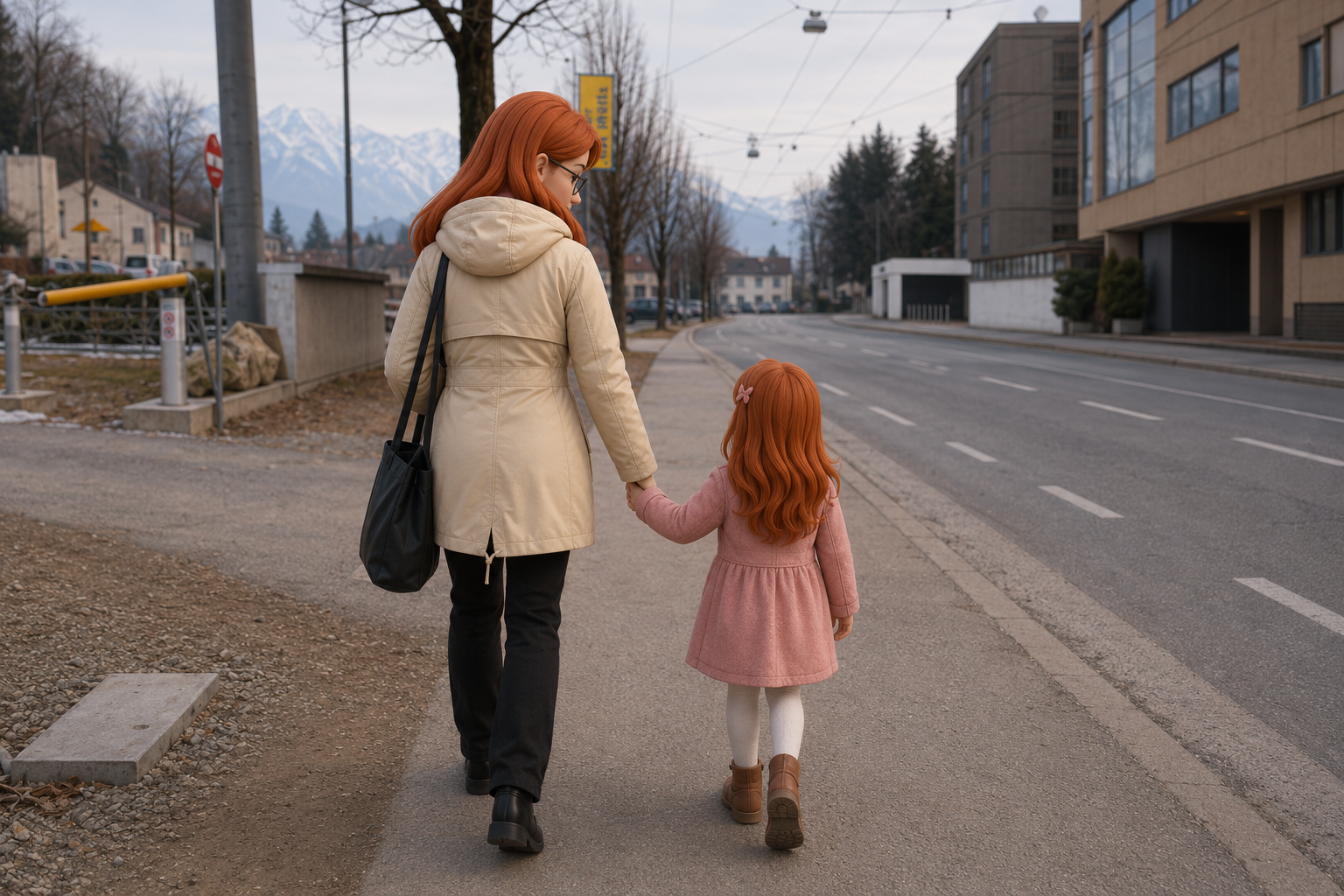
Every now and then, Scarlett wonders where she would be today if she had not had an abortion in her 20s.
Not because she regrets it.
Not because she is looking for forgiveness.
And certainly not because she owes strangers an explanation.
She wonders because one decision can change the entire direction of a life.
A different job.
A different city.
Different relationships.
Different opportunities.
Maybe different children.
Maybe a completely different version of Scarlett.
She will never know.
That is the thing about life.
You only get to live one version of it.
The loudest people in the abortion debate always seem convinced they know exactly what would have happened.
They do not.
Neither does Scarlett.
Maybe her life would have been better.
Maybe it would have been harder.
Maybe both.
If Scarlett is being honest, she believes she made the right decision.
More than that, she believes her life was better because she made it.
She believes her family’s life was better because she made it.
The opportunities she had.
The people she loved.
The children she eventually raised.
The grandchildren she adores.
None of it exists exactly as it does today without that choice.
But certainty is a funny thing.
Because Scarlett will never know.
There is no alternate universe she can visit.
No second life she can compare against this one.
Only the life she lived.
The one she built.
The one she (mostly) loves.
And the one she was free to choose.
But she knows one thing for certain:
The decision was hers.
And that matters.
While Scarlett was a child, abortion became legal.
Women before her fought for that right.
Not because they loved abortion.
Not because they celebrated it.
Not because they wanted anyone to have one.
They fought because they understood something painfully basic:
A woman should own her own future.
She should decide whether she is ready.
She should decide what risks she is willing to take.
She should decide what path her life follows.
Not politicians.
Not judges.
Not preachers.
Not strangers.
Her.
By the time Scarlett was old enough to face that decision, that right existed.
When one of the biggest crossroads of her life arrived, Scarlett was allowed to choose.
Today, Scarlett’s granddaughters have fewer rights than she did.
After decades of progress.
Scarlett’s GRANDDAUGHTERS have fewer rights than she did.
After generations of women fought, marched, voted, organized, argued, and sacrificed.
SCARLETT’S GRANDDAUGHTERS HAVE FEWER RIGHTS THAN SHE DID.
We are now debating whether young women deserve the same freedom their grandmothers had.
What in the flip kind of progress is that?
And before anyone says, “Well, adoption is always an option,” Scarlett would like a word.
She was adopted.
So yes, she knows adoption can be a beautiful answer.
Scarlett had a classmate who was also adopted. That friend’s parents told her she was chosen.
Chosen.
They said it so she would know she was loved.
Wanted.
Welcomed.
That is one version of adoption.
Scarlett had another.
When her mother was angry about whatever normal childhood behavior had pushed the wrong button that day, she would remind Scarlett she should be grateful to have a roof over her head.
Grateful she was not in foster care. Grateful for private school. Just flipping grateful.
Imagine being a child and learning that love could come with a bill.
Imagine learning that shelter could be used as a weapon.
Imagine learning that belonging could be conditional if you were inconvenient enough.
So please spare Scarlett the neat little adoption speeches.
Adoption may be an answer.
It is not the answer.
Not for every woman.
Not for every pregnancy.
Not for every child.
Not for every life.
The people shouting “just put the baby up for adoption” are usually not volunteering to carry the pregnancy, endure the birth, navigate the trauma, pay the bills, or live with the consequences.
Imagine.
You do not have to agree with Scarlett’s decision.
That was never the point.
The point is that it was hers.
No politician knew her circumstances.
No judge knew her fears.
No activist knew her future.
And none of them had to live with the consequences.
Scarlett did.
That is what freedom means.
The right to make profoundly personal decisions for yourself.
The right to succeed because of them.
The right to struggle because of them.
The right to own them.
So yes, Scarlett sometimes thinks about the life she did not live.
But she spends a lot more time thinking about the young women whose futures are being decided by people they will never meet.
And that makes her angry.
Because every woman deserves ownership of her own future.
Scarlett had that right.
Our granddaughters should have it too.
Scarlett says no.