Until it happens to them.
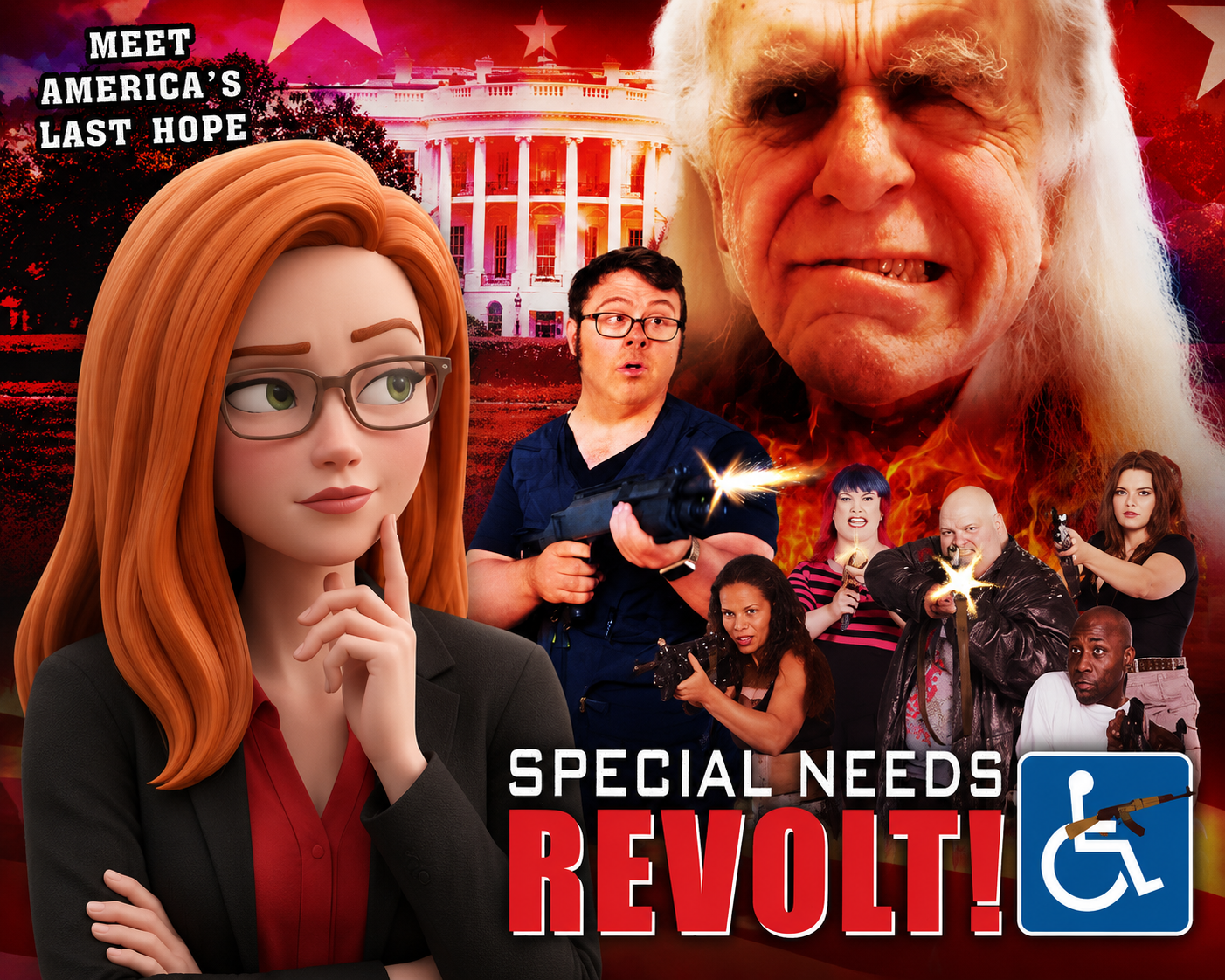
A relatively new independent film called Special Needs Revolt! imagines a future where people with disabilities are stripped of their rights and pushed to the margins of society.
It’s satire.
It’s fiction.
It’s exaggerated.
At least that’s what we’d like to think.
Because history suggests something else.
History suggests that every generation finds a group of people it is comfortable underestimating.
People it decides are less capable.
Less valuable.
Less deserving of a voice.
And history also suggests those groups eventually get tired of it.
What struck me about this movie isn’t the plot.
It’s the assumption underneath it.
The assumption that disability belongs to someone else.
Some other family.
Some other neighborhood.
Some other life.
But disability isn’t a niche issue.
It’s one of the few communities that almost anyone can join at any time.
A car accident.
A stroke.
A cancer diagnosis.
A traumatic brain injury.
A child born with different needs.
A parent developing dementia.
Enough birthdays.
That’s it.
Welcome to the club.
Which is why I’ve never understood why we talk about disability as if it affects only a small group of people.
It affects all of us.
Directly.
Indirectly.
Today.
Or eventually.
And yet society still tends to measure people by what they can’t do instead of what they can.
We see a wheelchair before we see a person.
A diagnosis before we see talent.
A limitation before we see potential.
That’s not a disability problem.
That’s a perspective problem.
I’ve met people with disabilities who contribute more to their communities than people with every advantage imaginable.
I’ve also met perfectly healthy people who spend their lives convincing themselves that other people are the problem.
The difference isn’t ability.
It’s opportunity.
It’s inclusion.
It’s whether someone was given the chance to participate in the first place.
That’s why stories like Special Needs Revolt! matter.
Not because they’re comfortable.
Because they’re uncomfortable.
They force us to ask who gets included.
Who gets heard.
Who gets ignored.
And who gets underestimated.
Personally, I’ve learned that underestimating people is almost always a mistake.
Especially when society has been doing it for generations.
Scarlett says no.
To writing people off.
To defining people by a diagnosis.
And to pretending disability is somebody else’s issue.