Author: Scarlett SaysNo

  • The Stories We Inherit

    The Stories We Inherit

    I grew up knowing only white people.

    I didn’t meet a person of color until I was in the eleventh grade.

    Not at school. Not playing softball. Not at Girl Scouts or on the tennis court.

    Not at the bowling alley and not at church.

    Not anywhere.

    By the time I finally met someone who didn’t look like me, almost everything I “knew” about people of color had come from someone else.

    I didn’t have opinions.

    I had stories.

    I had warnings.

    I had a whole lot of questions.

    And I trusted the adults who were answering them.

    My father worked in law enforcement. In our town, he wasn’t just my dad. He was someone people respected. When neighbors had a problem, they called him. Parents came to him when their kids got into trouble because they believed he could help. To a little girl, he wasn’t simply my father. He was someone the entire community trusted.

    So when he pointed out the “bad neighborhoods” as we drove through town, I believed him.

    Those neighborhoods always seemed to be where people of color lived.

    Leaving church, he’d notice a person of color pumping gas or walking down the street and question why they were there, as though their presence itself was suspicious.

    I wasn’t born believing any of that.

    I simply trusted the people who were teaching me about the world.

    Children don’t know what’s true.

    They know who they trust.

    My father wasn’t my only teacher.

    My neighborhood taught me.

    My school and my church taught me.

    The adults around me taught me.

    My first ZIP code taught me.

    Not because anyone sat me down and said, “Here’s what you should believe.”

    It happened one comment…

    One warning…

    One look…

    One story…

    One joke…

    …….at a time.

    The problem wasn’t just what I was being told.

    It was that I had almost no life experience to compare it against.

    When everyone around you tells the same story, it doesn’t feel like a story.

    It feels like reality.

    Sometimes I wonder who I would be if my story had ended there.

    What if I’d never left?

    What if I’d never met anyone who challenged those stories?

    Would I still believe them today?

    I honestly don’t know.

    Fortunately, my story didn’t end there.

    Right after high school, I had the fortune of working in a job alongside people from all over the world.

    Not stereotypes.

    People.

    People who worked hard.

    People who worried about their families.

    People who laughed.

    People who became my friends.

    People from different cultures with different traditions. Some I didn’t understand, but I was always interested in learning more.

    Nobody argued me out of the stories I’d inherited.

    Life did.

    My ex-husband and I grew up in much the same environment.

    We heard many of the same stereotypes.

    We heard much of the same language.

    We started in almost exactly the same place.

    That taught me something else.

    Your first ZIP code may write the opening chapter of your life.

    It doesn’t get to write the ending.

    Years later, after my divorce, I welcomed young women from different countries into my home as au pairs to help care for my children.

    They weren’t just employees.

    They became part of our family.

    My children grew up hearing different languages around our dinner table.

    Celebrating traditions from countries they had never visited.

    Learning that “different” wasn’t something to fear.

    It was something to learn from.

    Looking back, I realize those young women weren’t just helping me care for my children.

    They were helping finish raising me.

    Then September 11 happened.

    Almost overnight, I watched fear find a new target.

    The names changed.

    The accents changed.

    The religion changed.

    But the pattern was exactly the same.

    By then, life had already taught me something my first ZIP code never could.

    You cannot judge millions of people by the actions of a few.

    I’d learned that from friends who looked different than I did.

    From coworkers whose first languages weren’t English.

    From people who became family.

    From people whose first ZIP codes were thousands of miles away from mine.

    Once you’ve worked beside someone…

    Shared meals with them…

    Trusted them with your children…

    …it’s remarkably difficult to keep believing the stories you inherited.

    This isn’t really a story about racism.

    It’s a story about inheritance.

    Not money.

    Ideas.

    Assumptions.

    Fears.

    Stories.

    Some of what we inherit is beautiful.

    Some of it deserves to be questioned.

    None of us chose our first ZIP code.

    None of us chose the conversations we overheard as children.

    None of us chose the fears we inherited before we were old enough to test them against our own experiences.

    But eventually, every one of us reaches a point where we have to decide.

    Will we spend the rest of our lives defending borrowed beliefs?

    Or will we have the courage to build our own?

    My first ZIP code shaped me.

    It did not define me.

    And I wonder……

    How many of the beliefs we defend most fiercely aren’t really ours at all?

    How many simply belong to the first ZIP code we ever called home?

    Maybe your first ZIP code looked nothing like mine, but your first ZIP code taught you something too.
  • The Stock Market isn’t the Kitchen Table

    The Stock Market isn’t the Kitchen Table

    The Promise of Trickle-Down Economics

    Remember trickle-down economics?

    The phrase wasn’t coined by Ronald Reagan.

    It came from humorist Will Rogers in 1932, mocking the idea that if you gave enough money to the people at the top, prosperity would eventually find its way to everyone else.

    Nearly 50 years later, Reagan brought that philosophy back in the form of supply-side economics: lower taxes, reduce regulation, let businesses grow, and the benefits would spread throughout the economy.

    Forty-five years later……..

    We’re still waiting.

    Yes, millions of Americans have a 401(k).

    No, that doesn’t mean they live like Wall Street.

    A family with a retirement account they won’t touch for another 20 years doesn’t experience a record-breaking stock market the same way someone whose wealth comes from stocks does.

    The stock market isn’t the kitchen table.

    A record-breaking quarter doesn’t automatically mean a family can afford childcare.

    Or groceries.

    Or a medical bill.

    Or a week off without worrying about the rent.

    Somewhere along the way, we started measuring the success of the economy by how wealthy wealthy people become instead of asking a much simpler question:

    Are ordinary people actually building better lives?

    Because if the promise was that prosperity would trickle down…

    How long are we supposed to keep waiting?

    Scarlett says no.

  • Your First Zipcode

    Your First Zipcode

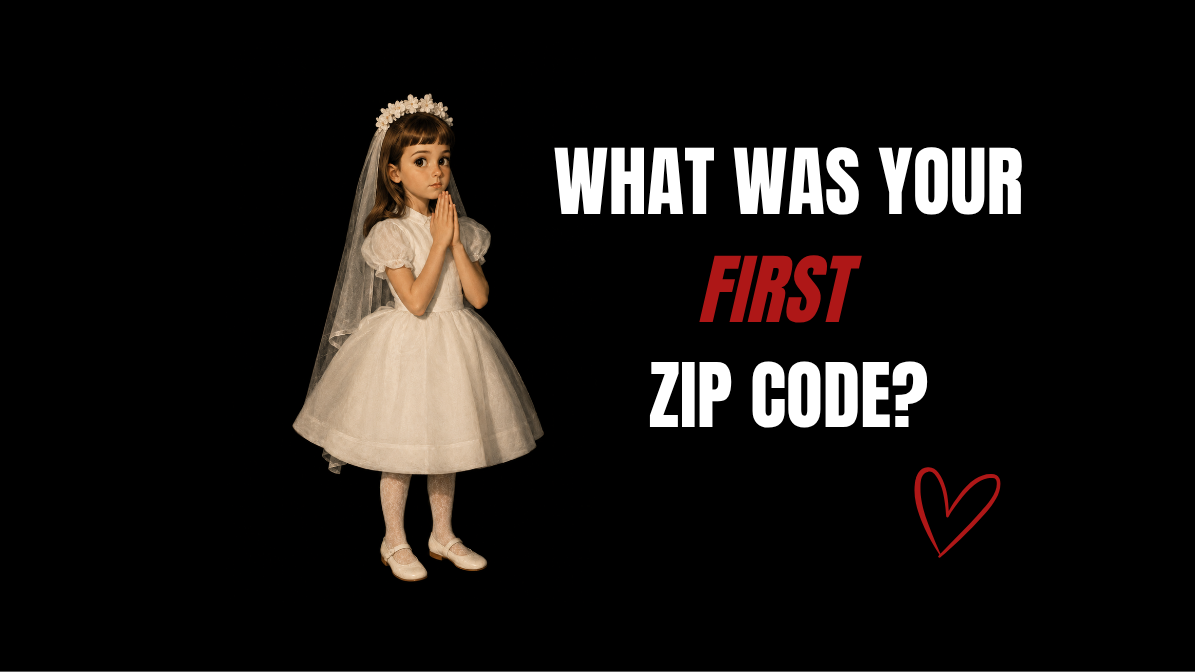
    Nobody chooses their first ZIP code.

    No, Scarlett isn’t talking about the five numbers the Post Office uses.

    Your first ZIP code is a metaphor.

    It’s the family you were born into.

    The neighborhood that raised you.

    The opportunities you were given…or denied.

    The people who loved you…or didn’t.

    The expectations placed on your shoulders before you were old enough to understand them.

    The trauma you carried.

    The safety you felt.

    The lessons you learned.

    And the ones you never should have.

    Your first ZIP code isn’t just where your story began.

    It’s where your life was shaped until you were finally old enough to start shaping it yourself.

    Even then, most of us don’t simply leave it behind.

    We carry pieces of it with us.

    The confidence.

    The fear.

    The habits.

    The resilience.

    The anger.

    The hope.

    The things that happened to us as children don’t disappear the day we become adults. They continue to influence the choices we make, the relationships we build, the risks we take, and sometimes the damage we pass on.

    Scarlett isn’t interested in making excuses for anyone.

    People are still responsible for what they do.

    But pretending our beginnings don’t matter is just another way of avoiding hard questions.

    Before someone became an addict…

    What was their first ZIP code?

    Before someone became abusive…

    What was their first ZIP code?

    Before someone became a refugee…

    What was their first ZIP code?

    Before someone became a CEO…

    What was their first ZIP code?

    Before someone broke a cycle that had existed for generations…

    What was their first ZIP code?

    Scarlett has a feeling we’ve been asking the wrong question all along.

    Instead of asking,

    “What’s wrong with that person?”

    Maybe we should first ask,

    “What happened before they ever had a choice?”

    Not because understanding someone’s beginning erases what they did.

    It doesn’t.

    But because understanding where someone started helps us understand how they got there.

    Some people build remarkable lives. Some become trapped by patterns they never chose. Most of us are still somewhere in the middle, trying to figure out which parts of our first ZIP code we want to keep…and which parts we need to leave behind.

    Over the coming months, Scarlett is going to tell stories through this lens.

    Some will be about history.

    Some will be about today’s headlines.

    Some will be about extraordinary people.

    Some will be about ordinary people.

    And some will be deeply personal.

    Because maybe the most important thing about your life isn’t where you live today.

    Maybe it’s the first ZIP code you never got to choose.

    Scarlett says no.

  • Target Recalled This Toy After a Child Started Choking.

    Target Recalled This Toy After a Child Started Choking.

    Maybe We Should Stop Calling That an “Oops.”

    Can we all agree that toys shouldn’t fall apart into choking hazards?

    I know. It’s a bold position.

    Yet here we are.

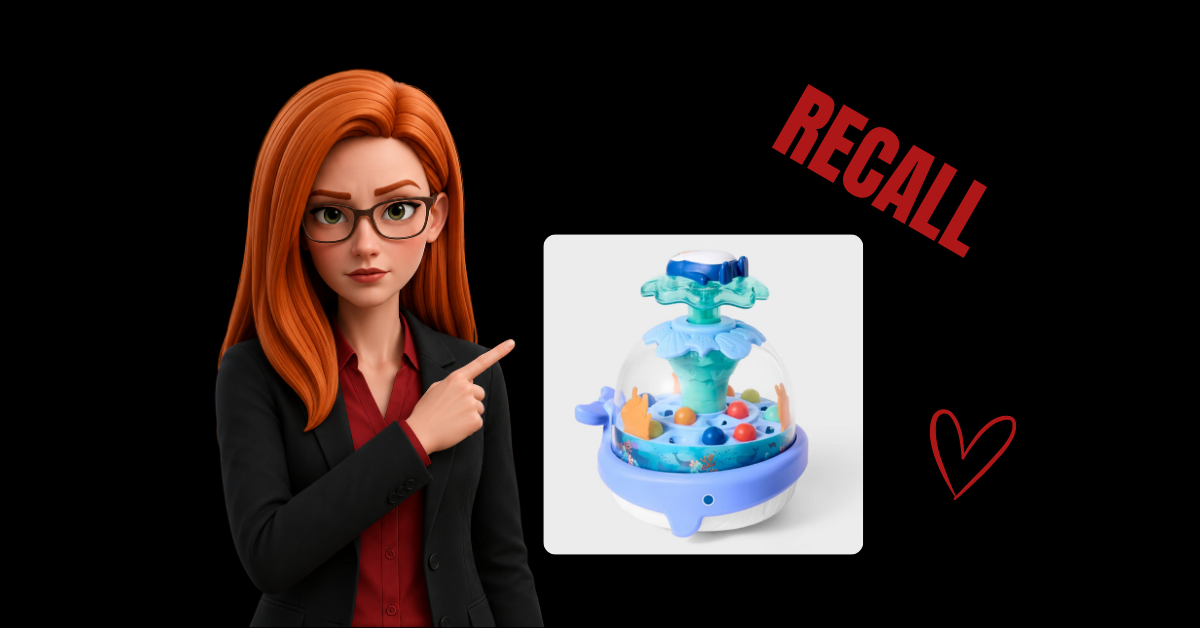
    Target has recalled nearly 49,000 Gigglescape Under the Sea Popping Toys after the clear plastic dome can detach and release small plastic balls. According to the U.S. Consumer Product Safety Commission, Target received nine reports of the dome coming off the toy. In one of those cases, a child reportedly began choking.

    One child.

    One terrified parent.

    One trip that could have ended very differently.

    And now there’s a recall.

    I’m glad the recall happened. That’s exactly what it’s supposed to do.

    But here’s the question I keep asking every time one of these lands on my desk:

    Why do families keep becoming the final safety test?

    Parents already have enough to think about. They’re checking expiration dates on car seats, reading ingredient labels, researching cribs, worrying about sleep safety, comparing strollers, and trying to remember whether blueberries need to be cut into quarters this week.

    Now we’re adding, “Hope this toy doesn’t explode into choking hazards.”

    That’s not a parenting problem.

    That’s a product safety problem.

    Here’s what was recalled

    The recall involves the Gigglescape Under the Sea Popping Toy, sold exclusively at Target stores and Target.com.

    The clear plastic dome can separate from the toy, releasing small plastic balls that create a choking hazard for young children.

    If you have one, stop using it immediately and keep it away from children. Target is offering a full refund.

    Simple.

    Here’s what I’d really like to see

    I’d love to see recalls become boring.

    I’d love for companies to catch dangerous design flaws before families do.

    I’d love for parents to spend less time checking recall lists and more time watching their kids play without wondering whether the toy in front of them is tomorrow’s headline.

    Until then, I’ll keep writing these.

    Because every recall represents a family that trusted someone to get it right.

    And sometimes they didn’t.

    Scarlett says no.


    Official Recall Information

    According to the U.S. Consumer Product Safety Commission, approximately 49,000 Gigglescape Under the Sea Popping Toys were recalled because the clear plastic dome can detach, releasing small plastic balls that present a choking hazard. Consumers should stop using the toy immediately and return it to Target for a full refund. Always review the official CPSC recall notice for product identification details and refund instructions.

  • When Did Flying Become an Obstacle Course?

    When Did Flying Become an Obstacle Course?

    Scarlett Travels: Austria, Part 1

    I’ve been to Europe more than 20 times over the past decade.

    I’ve traveled through airline strikes, air traffic control disruptions, snowstorms, COVID restrictions, changing entry requirements, overnight delays, canceled trains, missed trains, border crossings, volunteer missions into Ukraine, and enough airports that I no longer expect travel to be perfect.

    Things happen.

    Flights get delayed.

    Bags get lost.

    I’ve learned to roll with it.

    This trip felt different.

    Not because one thing went wrong.

    Because every part of the system seemed to be straining at the same time.

    I’ll start with my mistake because that one belongs to me.

    My flight from Boston through London landed in Munich at 11:30 Wednesday night. Somewhere between booking the flight and booking the hotel, I reserved my Marriott room for Thursday night instead of Wednesday night.

    Not Thursday morning.

    Thursday night.

    That one was entirely on me.

    After landing, I went through passport control, headed to baggage claim, and waited.

    One suitcase arrived.

    The other didn’t.

    There was no British Airways baggage office open that late.

    There was just a man collecting unclaimed luggage.

    He didn’t speak English, which isn’t a complaint—I was in Germany—but it made figuring out what to do next a little more challenging.

    Eventually, I understood enough to know I needed to come back the next morning and deal with the third-party company that handles baggage issues for British Airways in Munich.

    Fine.

    Annoying, but manageable.

    The missing suitcase wasn’t carrying anything I absolutely needed.

    It had Lightning McQueen toys for my grandson, a bottle of ranch dressing, a few cans of clams, a large container of Old Bay Seasoning that apparently looked suspicious enough on an airport scanner to deserve extra attention…

    …and my shower scrunchie.

    My plan had always been to spend the night near the airport. After an overnight international flight, I wasn’t about to drive two and a half hours to Salzburg in the dark. I grabbed a taxi and headed to the Marriott.

    That’s when I discovered I’d booked the room for the wrong night.

    Fortunately, the front desk manager found one room.

    While checking me in, he mentioned they’d had 11 flights canceled in the previous three days because of the heat.

    Eleven.

    Because of heat. Something about the runway melting…..

    I’ve watched Europe get warmer over the years.

    I’ve never had a hotel manager casually mention flight cancellations because it was too hot to fly.

    That got my attention.

    The next morning I took another taxi back to the airport.

    My plan was simple.

    Pick up the rental car.

    Retrieve the suitcase.

    Drive to Salzburg.

    Apparently, I had underestimated Munich Airport.

    First came Europcar.

    There were sixteen people ahead of me and only four associates working the counter.

    An hour and a half later, I finally had the rental car paperwork.

    Again, nobody was rude.

    Nobody was standing around doing nothing.

    There just weren’t enough people.

    Before heading to the baggage office, I walked all of my luggage out to the rental car.

    By then I’d been dragging a large checked bag, a backpack full of technology, and my purse around the airport for hours.

    I asked the man at the baggage office if I could leave them there while I retrieved the missing suitcase.

    He said no.

    He wasn’t allowed to accept them, and if I walked away, they wouldn’t be monitored.

    So my choices were simple.

    Drag everything through customs.

    Or walk everything to the car and then walk back.

    I chose the car.

    It took more time.

    It still made more sense.

    Then the real adventure began.

    The baggage office told me my suitcase was in storage and I’d have to go through customs and border control to retrieve it.

    They gave me a temporary pass that expired after one hour.

    The line I had to stand in wasn’t for people retrieving luggage.

    It was the same line everyone else was using.

    By the time I reached passport control, my pass had expired.

    Fortunately, they let me through anyway.

    I finally reached the baggage office.

    The employee searched.

    Made phone calls.

    Waited.

    Then apologized.

    My suitcase wasn’t there.

    So I went back out through customs and border control.

    Again.

    Back at the office where I’d started, another employee made another phone call.

    Another apology.

    Apparently, my suitcase wasn’t in the baggage office after all.

    Now it was supposedly in a storage closet just beyond customs.

    Which meant…

    I’d have to go through customs a third time.

    That was where I stopped.

    My passport had already been stamped when I entered Germany the night before.

    Since breakfast, I’d already gone through customs and back out again trying to retrieve one checked suitcase.

    I finally asked the obvious question.

    “Does anyone actually know where my bag is?”

    Nobody answered it.

    Instead, they apologized.

    Again.

    The employee wasn’t the problem.

    In fact, every single person I dealt with genuinely seemed to want to help.

    The problem was that nobody seemed to own the problem.

    Everyone had one piece of information.

    Nobody had the whole picture.

    So we agreed they’d ship the suitcase to Austria.

    The next day it showed up at my son’s house.

    No phone call.

    No text.

    No email.

    Someone simply left it in the foyer and left.

    Lightning McQueen made it.

    The ranch dressing made it.

    The canned clams made it.

    Even the Old Bay survived.

    And yes…

    My shower scrunchie made it too.

    By the time I finally left Munich, the drive that should have taken about two hours and twenty minutes took more than three because of traffic.

    I arrived at my hotel in Salzburg around six o’clock that evening.

    Then I realized my original hotel mistake in Munich had followed me to Salzburg.

    Because I’d booked Munich for the wrong night, I was now one night short in Salzburg.

    Once again, Marriott found me a room.

    Once again, the person checking me in mentioned my Marriott status.

    Maybe that helped.

    Maybe it didn’t.

    If the hotel is sold out, status doesn’t magically create another room.

    But twice in two days, someone found a way to accommodate me, and I’m grateful they did.

    As ridiculous as this all sounds, here’s what stayed with me.

    I’ve been traveling to Europe for years.

    The mountains haven’t changed.

    The villages haven’t changed.

    The people haven’t changed.

    What feels different are the systems around the journey.

    Extreme heat is now affecting flights.

    Airlines rely on layers of contractors.

    Companies outsource pieces of the customer experience until no one seems able to solve a simple problem from beginning to end.

    And for the first time in more than twenty trips, I caught myself wondering whether being American changes how we’re received overseas.

    I don’t know the answer.

    Maybe it doesn’t.

    I hope it doesn’t.

    But the fact that I even asked myself the question surprised me.

    Travel has always taught me about the places I visit.

    This trip taught me something else.

    Sometimes the biggest lesson isn’t about the destination.

    It’s about what the journey reveals.

    A few hours after my suitcase finally arrived in Austria, British Airways emailed me a customer satisfaction survey.

    I’ve flown British Airways many times, and I’ve generally had very good experiences.

    That’s why this one stood out.

    It wasn’t one bad employee.

    It wasn’t even one bad airline.

    It was a reminder that modern travel feels more fragile than it used to.

    And I have a feeling this trip is just getting started.

    Scarlett says no.

  • Three Supreme Court Justices Read the Constitution …

    Three Supreme Court Justices Read the Constitution …

    and said… “Nah.”

    Three Supreme Court justices looked at the Fourteenth Amendment and apparently thought — Eh. Maybe it doesn’t really mean that.

    Not a tax law.

    Not a regulation.

    Not some dusty agency rule no one can explain without needing a nap.

    A constitutional right.

    A right understood for more than 150 years.

    And three members of the highest court in the country were willing to let a president try to rewrite it with an executive order.

    That is not an immigration debate.

    That is a constitutional fire alarm.

    People keep saying this is about birthright citizenship.

    No.

    This is about whether constitutional rights can be reinterpreted every time someone in power decides they don’t like them. If you’ve been following Scarlett for any length of time, you already know why I keep saying No Rights Are Safe.

    That’s the precedent.

    Today it’s birthright citizenship.

    Tomorrow it’s another constitutional protection.

    The day after that?

    Maybe it’s one you actually care about.

    Free speech.

    Religious freedom.

    Due process.

    Protection from unreasonable searches.

    Equal protection.

    Once you accept that constitutional rights can simply be “reinterpreted” to fit the politics of the moment, you’ve stopped talking about rights.

    You’re talking about permissions.

    And permissions can be revoked.

    If Americans want to change the Constitution, there’s already a process for that.

    It’s called a constitutional amendment.

    It is intentionally difficult because our rights are not supposed to swing back and forth every time the White House changes hands.

    If you believe constitutional rights deserve more protection than political opinions, don’t just complain about it. Take Action.

    Here’s the part people want to dodge.

    You don’t have to support birthright citizenship to be disturbed by this.

    You don’t even have to like the Fourteenth Amendment.

    You should still care whether presidents can decide which parts of the Constitution count.

    Because once that answer becomes “yes,” every constitutional right comes with an expiration date.

    The Constitution was not written in pencil.

    It does not come with an eraser.

    If you’re new here, find out why Scarlett keeps saying no.

    Scarlett says no.

  • Who’s Going to Tell the Powerful “No?”

    Who’s Going to Tell the Powerful “No?”

    The Supreme Court just handed presidents more power over independent watchdog agencies.

    Some people will tell you this is an argument about constitutional law.

    No.

    It’s an argument about who stands between ordinary people and powerful institutions when something goes wrong.

    There is a reason agencies like the Federal Trade Commission exist.

    There is a reason the Consumer Financial Protection Bureau exists.

    There is a reason we created watchdogs in the first place.

    Because history has already answered the question of what happens when we simply trust powerful people and corporations to police themselves.

    People get hurt.

    Homes are lost.

    Savings disappear.

    Families spend years digging out of holes they never saw coming.

    I’ve watched people walk in believing they just needed a little more time.

    One missed payment.

    Maybe two.

    They thought if they could just catch up next month, everything would be fine.

    That’s not how it works.

    Interest doesn’t stop because life happened.

    The unpaid interest continues to accrue. The balance grows. Fees may be added. The amount needed to become current gets larger while the family’s ability to catch up often gets smaller.

    Suddenly they aren’t trying to make one payment.

    They’re trying to catch two.

    Then three.

    The hole gets deeper every month.

    By the time many people finally ask for help, they aren’t looking for a miracle.

    They’re looking for any option.

    Sometimes there wasn’t one.

    Sometimes the conversation became:

    “I’m sorry… your choices are a short sale, a forbearance agreement if you qualify, or voluntary foreclosure.”

    Those aren’t conversations anyone ever forgets.

    The CFPB wasn’t created because government wanted another agency.

    It was created because millions of Americans learned the hard way what happens when the financial system has too few guardrails and too little accountability.

    The FTC wasn’t created because corporations volunteered to play fair.

    It was created because too many didn’t.

    Independent watchdogs exist for one reason:

    To tell powerful people “No.”

    To tell companies they can’t deceive consumers.

    To tell banks they can’t ignore the rules.

    To tell corporations they can’t simply do whatever makes the most money and worry about the consequences later.

    Today’s Supreme Court decision isn’t just about who gets to fire agency leaders.

    It’s about whether the people responsible for protecting the public can do their jobs without wondering whether keeping those jobs depends on pleasing the people in power.

    Because when watchdogs become less independent, history suggests the people most likely to pay the price aren’t the executives.

    They aren’t the lobbyists.

    They aren’t the politicians.

    They’re the families sitting around the kitchen table wondering how one setback turned into losing everything.

    That’s why watchdogs exist.

    Not because government is perfect.

    Because people aren’t.

    And neither are corporations.

    Scarlett says no.

  • Trankerloop Baby Bath Seats Recalled

    Trankerloop Baby Bath Seats Recalled

    Serious Drowning Hazard

    Parents assume that products made specifically for babies have already met the most basic safety standards.

    Unfortunately, that’s not always true.

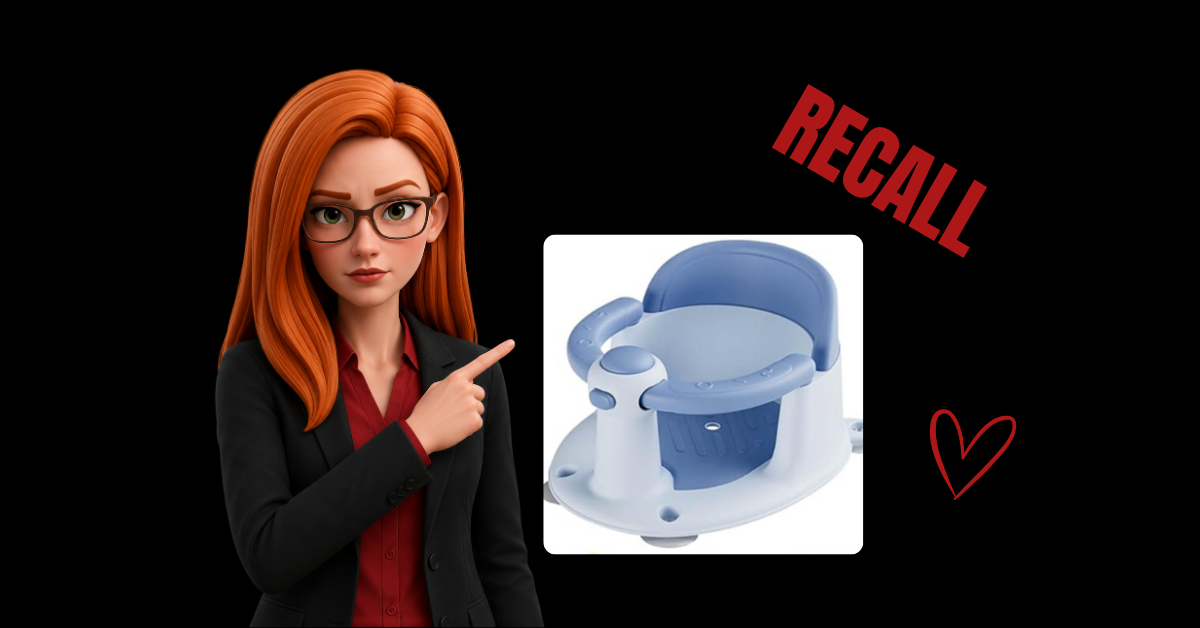
    The U.S. Consumer Product Safety Commission (CPSC) has recalled approximately 2,380 Trankerloop Baby Bath Seats because they violate the federal safety standard for infant bath seats. According to the CPSC, the seats can tip over while in use, creating a serious risk of injury or death from drowning.

    The recalled bath seats were sold exclusively on Amazon between August and October 2025 for about $36. They were available in blue, gray, pink, and yellow and include four suction cups, two detachable restraint arms, a cup, and a sponge. The label on the back reads “PLASTIC STOOL” and Model YD-1958.

    Thankfully, no injuries have been reported.

    But Scarlett has a simple question:

    Why are baby products that don’t meet mandatory federal safety standards making it into parents’ homes in the first place?

    Parents shouldn’t have to become product safety investigators every time they shop online.

    If a product is marketed for infants, it should meet federal safety standards before it reaches a family’s doorstep—not after a recall.

    If you own one of these bath seats, stop using it immediately. Contact Trankerloop for a full refund and follow the CPSC’s instructions for destroying the product before requesting reimbursement.

    When it comes to babies, “we caught it before someone died” shouldn’t be considered success.

    Children deserve better.

    Parents deserve better.

    Scarlett says no.


    Official Source

    U.S. Consumer Product Safety Commission: https://linkpod.site/cpsc_bathseat

  • Ron DeSantis Had a Billion Dollars ….

    Ron DeSantis Had a Billion Dollars ….

    He Just Didn’t Spend It on Floridians.

    Every year, Floridians are told to prepare.

    Prepare for another hurricane.

    Prepare for another insurance increase.

    Prepare for higher property taxes.

    Prepare for crowded classrooms.

    Prepare for another year of not being able to afford a home.

    Prepare to do more with less.

    Apparently, the only person in Florida who never has to prepare for a budget shortage is Ron DeSantis.

    Because when he wanted to build immigration detention camps, he somehow found nearly a billion dollars.

    According to a Miami Herald investigation, DeSantis’ administration signed at least 55 contracts worth roughly $1 billion to build and operate two state-run immigration detention facilities, including the Everglades camp his administration proudly called “Alligator Alcatraz.”

    A billion dollars.

    Think about that for a minute.

    A governor who says government spends too much…

    …spent a billion dollars building cages.

    And before anyone says, “Well, they were all dangerous criminals…”

    No.

    Reporting found that hundreds of people detained had no criminal charges. Some had pending asylum claims. Some were seeking lawful permanent residence. Many had jobs, spouses, children, and lives rooted in Florida.

    These weren’t strangers from some distant place.

    Some were Florida’s neighbors.

    Florida’s coworkers.

    Florida’s taxpayers.

    People who helped pay into the very system that ended up locking them behind its fences.

    Read that again.

    Florida taxpayers helped finance a detention system that could be used against other Florida taxpayers.

    If that doesn’t bother you, it should.

    Because history has taught us something over and over again.

    Governments don’t spend a billion dollars building detention systems because they expect to use them once.

    They build them because they plan to use them.

    Today it’s undocumented immigrants.

    Tomorrow it’s someone with Temporary Protected Status.

    Someone whose green card renewal is delayed.

    Someone with a pending asylum case.

    Someone who showed up for an immigration appointment believing they were following the rules.

    Every expansion of government power begins with the promise that it will only be used against those people.

    Until one day…

    Those people become your neighbors.

    Or your coworkers.

    Or your family.

    Or you.

    Meanwhile, back in the real Florida…

    Families are choosing between groceries and homeowners insurance.

    Teachers are buying school supplies with their own money.

    Young adults have given up on buying a home.

    Seniors are wondering how much longer they can afford to stay in theirs.

    Veterans wait for services.

    Communities brace for the next hurricane.

    And somehow we’re told there’s never enough money.

    Really?

    Because when Ron DeSantis wanted a headline, a billion dollars appeared out of thin air.

    Imagine if he’d shown the same urgency for lowering insurance premiums.

    Or making housing affordable.

    Or strengthening schools.

    Or helping communities recover after storms.

    Or fixing Florida’s crumbling infrastructure.

    Instead, Florida got Alligator Alcatraz—a political stunt with a billion-dollar price tag.

    One more thing.

    According to the Herald, one of the biggest winners wasn’t a construction company.

    It wasn’t an engineering firm.

    It wasn’t a hospital.

    It wasn’t emergency management.

    It was a portable toilet company.

    More than $219 million.

    For porta-potties.

    You really can’t make this stuff up.

    The question isn’t whether Florida had a billion dollars.

    It did.

    The question is what kind of governor looks at families struggling to insure their homes, teachers struggling to educate their students, seniors struggling to stay afloat… and decides the state’s biggest priority is building more places to lock people up.

    That’s not fiscal responsibility.

    That’s not leadership.

    That’s choosing political theater over the people you were elected to serve.

    Scarlett says no.

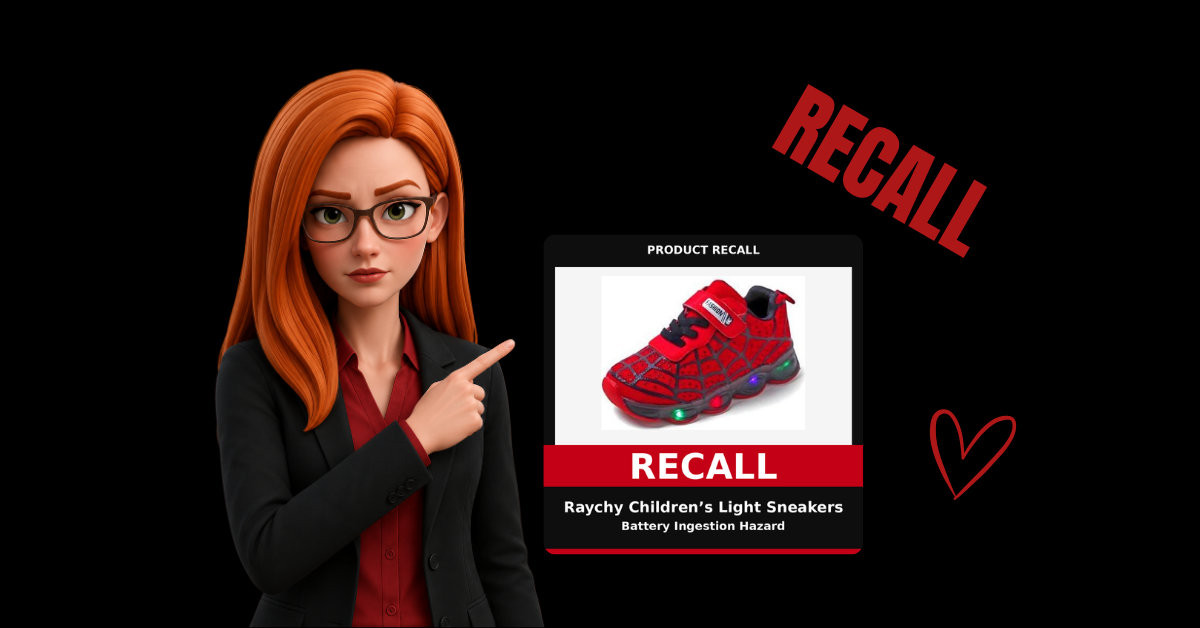
  • Raychy Children’s Light Sneakers Recalled

    Raychy Children’s Light Sneakers Recalled

    Button Battery Hazard Could Seriously Injure or Kill Children

    Another children’s product. Another dangerous design.

    Raychy Children’s Light Sneakers imported by Carina and Rambo have been recalled because children can access the shoes’ coin battery compartment. If a child swallows one of these batteries, it can cause severe internal burns in as little as two hours, leading to permanent injury or death.

    The shoes violate the mandatory federal safety standard for products containing button or coin batteries.

    Recalled Product

    • Product: Raychy Children’s Light Sneakers
    • Importer: Carina and Rambo
    • Where Sold: Amazon
    • Hazard: Children can access the coin battery compartment.
    • Risk: Battery ingestion can cause severe internal burns, permanent injury, or death.

    What You Should Do

    • Stop using the recalled shoes immediately.
    • Keep them away from children.
    • Follow the recall instructions for a refund or other remedy.
    • If you believe a child has swallowed a button battery, seek emergency medical attention immediately. Time matters.

    Button batteries may be small, but the injuries they cause can be catastrophic.

    Scarlett says no.