Author: Scarlett SaysNo

  • They didn’t change the laws, they changed the words.

    They didn’t change the laws, they changed the words.

    How “embryo adoption” became the next step to personhood.

    They learned something after Roe v. Wade was overturned.

    If you tell people exactly what you’re trying to do, they push back.

    So now they call it something people won’t question.

    “Embryo adoption.”

    It sounds compassionate.

    Who could possibly be against helping families?

    That’s exactly why the name matters.

    The Trump administration is using federal dollars to support an Embryo Adoption Program. On the surface, it sounds like another fertility program.

    It isn’t.

    The entire premise is that frozen embryos should be treated as children waiting to be adopted.

    Read that again.

    Not potential life.

    Not embryos stored in a fertility clinic.

    Children.

    That isn’t just a wording choice.

    It’s a legal argument.

    For years, anti-abortion organizations have been working toward one goal: fetal personhood. The idea is simple. If legal personhood begins the moment an egg is fertilized, then every fertilized embryo has the legal rights of a child.

    Once you accept that idea, everything else starts to change.

    If a frozen embryo is a child, what happens to IVF clinics that routinely create multiple embryos?

    What happens when embryos are tested for genetic conditions?

    What happens when unused embryos are discarded because the family has completed treatment?

    And what happens to emergency contraception or other birth control methods that opponents argue could affect a fertilized egg, even when medical evidence says they primarily work by preventing ovulation?

    These aren’t hypothetical questions.

    They’re the legal consequences of redefining when personhood begins.

    Notice what’s missing from the conversation.

    Nobody asked the American people whether frozen embryos should have the same legal status as children.

    Nobody voted on it.

    Congress didn’t debate it.

    Instead, the language is changing first.

    Because language shapes law.

    If government agencies start describing frozen embryos as children in grant programs, policy documents, and official guidance, that language doesn’t stay there forever. It becomes part of the legal foundation for future court cases, legislation, and regulatory decisions.

    Support IVF if you want.

    Oppose abortion if you want.

    Those are debates reasonable people can have.

    But every American should be paying attention when the federal government quietly starts redefining personhood one policy at a time.

    This isn’t just about helping families have children.

    It’s about changing what the government believes a child already is.

    And once that definition changes, the consequences won’t stop at abortion.

    Scarlett says no.

  • BABESIDE Doll & Stroller Toy

    BABESIDE Doll & Stroller Toy

    Recall: Choking Hazard for Babies

    A toy made for babies should never include parts that can kill them.

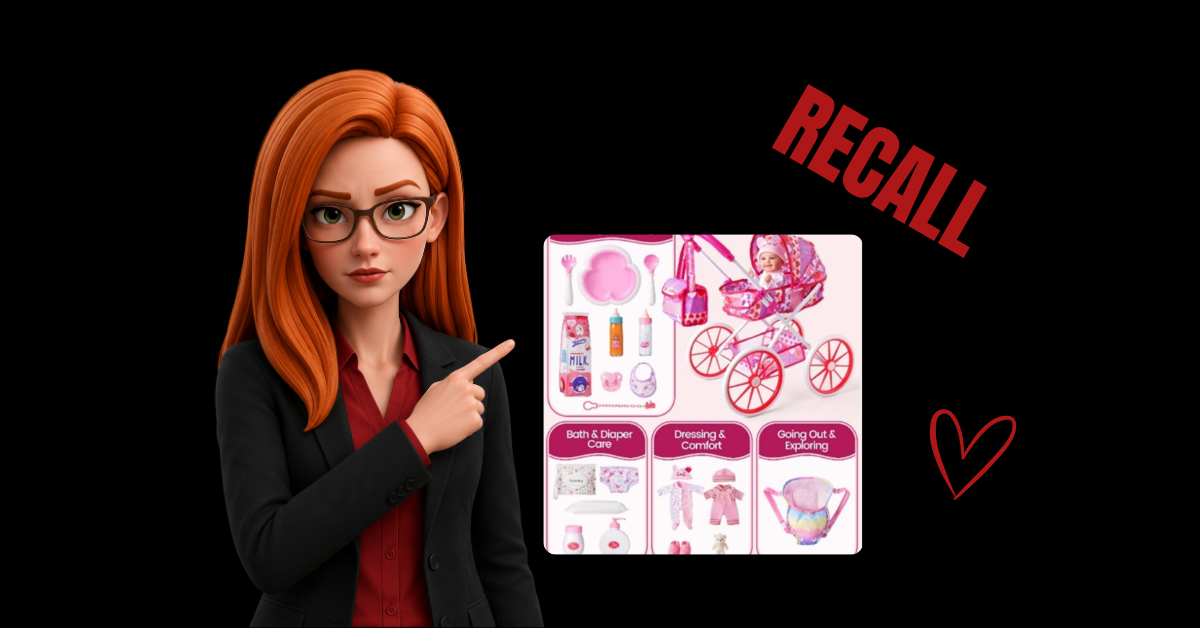
    The BABESIDE Doll and Stroller Children’s Toys have been recalled because they violate the federal small parts ban for toys intended for children under 3. The toy’s tiny pacifier can become a deadly choking hazard, and the plush bear’s eyes can also detach and be swallowed. About 2,200 units were sold on Amazon.  

    If your child has this toy set:

    • Stop using it immediately.
    • Take the plush bear and pacifier away from children.
    • Contact the seller for free replacement accessories.
    • Follow the recall instructions before disposing of the recalled parts.  

    Children explore the world with their hands—and their mouths. That’s exactly why these safety standards exist. They aren’t suggestions. They’re the minimum requirements for keeping children alive.

    If you know someone with a baby or toddler, share this alert.

    Scarlett says no.  

  • When Did Everything Become Your Problem?

    When Did Everything Become Your Problem?

    Somewhere Along the Way, They Changed the Deal

    Nobody announced it.

    There wasn’t a national speech.

    No parade.

    No headline.

    But somewhere along the way, America quietly changed the deal.

    There was a time when employers took responsibility for more than your paycheck.

    If you worked hard and stayed loyal, many companies promised a pension.

    Healthcare in retirement was more common.

    College didn’t require decades of debt.

    A single income could often buy a home and support a family.

    Was life perfect?

    Of course not.

    But something fundamental has changed.

    Today, if you can’t afford college…

    That’s your problem.

    If your medical bills bankrupt you…

    That’s your problem.

    If housing prices outrun your paycheck…

    That’s your problem.

    If your retirement account loses half its value because the stock market crashes the year before you retire…

    That’s your problem too.

    Look closely and you’ll notice a pattern.

    The risks didn’t disappear.

    They changed owners.

    The responsibility that businesses and institutions once carried has been steadily shifted onto ordinary people.

    When pensions gave way to 401(k)s, companies didn’t just change retirement plans.

    They changed who carried the risk.

    If the investments failed, workers paid the price.

    Not the company.

    That wasn’t an accident.

    It was a business decision.

    And it wasn’t the only one.

    Over the past forty years we’ve watched more and more of life’s biggest risks land squarely on the shoulders of the people least able to absorb them.

    Healthcare.

    Housing.

    Higher education.

    Retirement.

    Meanwhile, corporate profits reached record highs, CEO pay exploded, and workers were told to budget better, skip the avocado toast, and somehow invest their way to security.

    Here’s the question I can’t stop asking.

    When did America stop asking, “How do we build a country where hard work leads to security?”

    And start asking, “Why didn’t you prepare better?”

    Some people will tell you that’s just capitalism.

    Others will tell you that’s just life.

    Scarlett calls it something else.

    A broken deal.

    And maybe it’s time we stopped pretending nobody noticed.

    Scarlett says no.

  • When Did Belonging Become a Competition?

    When Did Belonging Become a Competition?

    America teaches children to scream “we’re number one” before it teaches them how to belong.

    What in the flip?

    Be the best.

    Beat the rest.

    Win the game.

    Make the team.

    Get the trophy.

    Get picked.

    Get ranked.

    Get ahead.

    And then we act shocked when people grow up believing their worth depends on being chosen.

    Scarlett loves effort. She loves excellence. She loves watching people push themselves and discover what they’re capable of.

    But there is a difference between encouraging people to grow and teaching them that second place means second-class.

    That is where the damage starts.

    Because here’s what is not on the pep rally banner —

    Most people will not be number one.

    Most kids will not be the star athlete.

    Most students will not be valedictorian.

    Most workers will not be the top producer.

    Most people will spend their lives doing ordinary, necessary, beautiful things that hold families, workplaces, neighborhoods, schools, and communities together.

    And somehow we teach them to feel like that is not enough.

    That is the part Scarlett cannot stand.

    Not everyone wants to be famous.

    Not everyone wants to dominate.

    Not everyone wants to crush the competition.

    Some people just want to belong.

    They want to be included.

    They want to be needed.

    They want to know they matter even when they are not winning, performing, producing, ranking, proving, and auditioning for basic human worth.

    And honestly?

    That should not be a radical request.

    The world does not run because everyone is the best.

    It runs because people show up.

    They help.

    They teach.

    They coach.

    They clean.

    They drive.

    They listen.

    They organize.

    They care.

    They stay.

    Competition has its place.

    But when a culture worships winning too much, it starts treating belonging like something people have to earn.

    You belong if you win.

    You belong if you stand out.

    You belong if someone chooses you.

    No.

    People need belonging before they can become their best.

    Not after.

    Scarlett says no to a world where everyone is taught to climb over each other just to feel worthy.

    Maybe the better question is not “are you number one?”

    Maybe it is this —

    Are the people around you glad you are on the team?

  • They Want June Cleaver Back

    They Want June Cleaver Back

    Women Remember the Fine Print.

    Every time women’s rights come up, somebody starts romanticizing the past.

    They want June Cleaver back.

    And Donna Reed.

    And Harriet Nelson.

    And every perfectly dressed television mother who smiled in a spotless kitchen while dinner magically appeared, children behaved, and nobody talked about money, fear, abuse, depression, alcoholism, infidelity, or what happened when the front door closed.

    Later came Carol Brady, Marion Cunningham, and a dozen other television versions of the ideal American family.

    The message was always the same:

    This is what a good woman looks like.

    Smile.

    Serve.

    Sacrifice.

    Don’t complain.

    Don’t ask for too much.

    And whatever you do, don’t make anyone uncomfortable by wanting more.

    The problem?

    Most of it was fantasy.

    Television sold America an image.

    Real women lived something very different.

    Women couldn’t get a credit card in their own name.

    Women couldn’t easily get a mortgage.

    Women often couldn’t build independent credit.

    Women had fewer career opportunities.

    Women frequently stayed in bad marriages because leaving meant financial disaster.

    June Cleaver never had to wonder how she would support herself if Ward left.

    The script never asked that question.

    Real women did.

    That’s why I roll my eyes every time someone talks about going back to “traditional values.”

    Traditional for whom?

    Because what some people call traditional values often looks suspiciously like traditional dependence.

    Women have spent generations fighting for rights men never had to fight for.

    The right to vote.

    The right to own property.

    The right to build credit.

    The right to have careers.

    The right to serve in the military.

    The right to control their own financial future.

    Not because women wanted special treatment.

    Because women wanted access to opportunities that men already had.

    And now we’re watching a military ceremony honoring women veterans get canceled.

    A ceremony recognizing women who volunteered, served, sacrificed, deployed, led, and defended this country.

    Women who earned that recognition.

    Women who earned that respect.

    Women who shouldn’t have to keep proving their value every single generation.

    That’s what bothers me.

    Women raise families.

    Women build careers.

    Women care for aging parents.

    Women volunteer.

    Women run businesses.

    Women serve their communities.

    Women serve their country.

    Women keep entire households functioning while carrying mental loads that would break most people.

    Then society turns around and asks whether women have contributed enough to deserve recognition.

    ENOUGH!

    Women are not a diversity initiative.

    Women are not a special interest group.

    Women are half the population.

    We’ve spent centuries helping build this country while fighting for rights that many men received simply by being born.

    Forgive us if we’re not interested in going backward.

    Scarlett says no.


  • Children With Disabilities Are Not Paperwork

    Children With Disabilities Are Not Paperwork

    The Trump administration is moving special education oversight out of the Department of Education and into Health and Human Services.

    Supporters call it reorganization.

    Parents call it something else.

    Because when a child needs help, the question is not which federal agency handles the paperwork.

    The question is whether that child gets the services they need.

    And that is where Scarlett gets pissed.

    Scarlett has a granddaughter on the autism spectrum.

    She does not know exactly what support her granddaughter will need as she grows.

    She does not know what challenges she will face.

    But she knows this:

    Her granddaughter deserves every opportunity to become whoever she is capable of becoming.

    And that opportunity should not depend on how much money her parents have.

    Because here is the ugly truth nobody wants to talk about:

    When public support systems are weakened, wealthy families still find a way.

    They hire specialists.

    They pay for private evaluations.

    They pay for tutors.

    They pay for therapies.

    They pay for advocates.

    They pay for private schools designed specifically for children with additional needs.

    Someone close to Scarlett has a grandson who requires specialized educational support. His parents are fortunate enough to afford a private school designed to meet those needs.

    Good.

    Every child deserves that kind of support.

    But what about the families who cannot write those checks?

    What about the single mother working two jobs?

    What about the grandparents raising grandchildren?

    What about the parents already choosing between rent, groceries, prescriptions, and gas?

    What happens to their children?

    Because those children deserve the same opportunity to succeed.

    Scarlett’s own children benefited from IEPs and educational support because ADHD was part of their family’s story.

    And yes, Scarlett knows exactly what some people are thinking.

    ADHD?

    Scarlett?

    No.

    Surely not the woman with a demanding full-time job, a real life outside of Scarleting, 47 tabs open, three causes on fire, a missing password, a half-written post, an unanswered text, laundry judging her from the corner, and a sudden urgent need to reorganize a website menu at midnight.

    Shocking.

    But when Scarlett was a kid, nobody knew what the heck ADHD was.

    There were no IEP meetings.

    There were no accommodations.

    There were no conversations about executive functioning, learning differences, or how smart kids can still struggle.

    There was “sit still.”

    There was “pay attention.”

    There was “try harder.”

    And in Catholic school, there was sometimes a yardstick.

    Scarlett is not romanticizing that. She is condemning it.

    Because a lot of children were punished for things adults did not understand, did not support, or did not want to deal with.

    Scarlett still remembers getting whacked across the knees because her skirt was a little too short.

    Every Friday for most of seventh and all of eighth grade.

    The crime?

    Having a skirt that was more than 3 inches above her knee.

    The culprit?

    According to the school, the child wearing the uniform.

    Not the parent who bought it.

    Not the family budget.

    Not the fact that children have the audacity to grow.

    The child.

    Ah yes.

    The educational philosophy of the era seemed to be: when in doubt, blame the kid.

    That was not discipline.

    That was adults taking their frustration, control, and ignorance out on a child.

    And yes, here is another hidden connection to Scarlett’s abortion article.

    Because this is the same pattern.

    Force the birth.

    Police the child.

    Punish the parent.

    Ignore the poverty.

    Blame the kid.

    Then act shocked when people say the system was never really pro-life at all.

    Children are not born into equal circumstances.

    Some are born into families with money, time, advocates, access, transportation, flexibility, private specialists, and backup plans.

    Others are born into families doing the absolute best they can while barely keeping the lights on.

    That child’s future should not depend on which family they got dropped into.

    That is why special education matters.

    That is why IEPs matter.

    That is why public schools matter.

    That is why federal protections matter.

    That is why Federal Pell Grants matter. Or better yet, some form of universal secondary education.

    Because support does not make a child less capable.

    It helps the world finally see what was already there.

    Scarlett’s children didn’t succeed because someone lowered the bar.

    They succeeded because someone finally understood what they needed to clear it.

    And they succeeded because they had a mother in their corner.

    A mother who believed in them.

    A mother who pushed for them.

    A mother who sat through meetings, asked questions, challenged decisions, and occasionally became a royal pain in the ass when she thought someone was overlooking her kids.

    A mother who sometimes fought battles for them that, looking back, she probably should have let them fight themselves.

    But when you are a parent and you see your child struggling, you do not always get that balance right.

    You just fight.

    Because children need systems that work.

    But they also need adults who will fight like hell when those systems don’t.

    And if we make it harder for families to access services, harder to enforce protections, and harder to hold schools accountable, the children who suffer will not be the wealthy ones.

    The wealthy will find another option.

    The children who suffer will be the ones whose families do not have one.

    Children with disabilities are not paperwork.

    They are not budget items.

    They are not political talking points.

    They are children.

    And they deserve better than this.

    Scarlett says no.
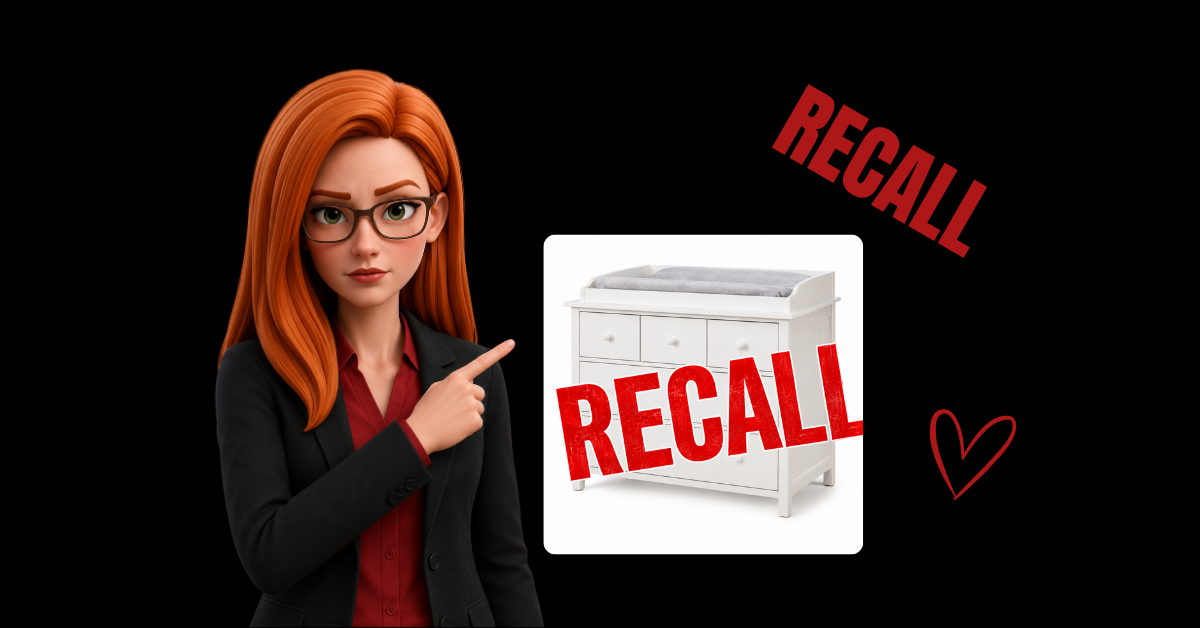
  • Timechee Changing Table Dressers Recalled Due to Tip-Over and Entrapment Hazard

    Timechee Changing Table Dressers Recalled Due to Tip-Over and Entrapment Hazard

    🚨 CHILD SAFETY RECALL 🚨

    If you purchased a Timechee Changing Table Dresser on Amazon, stop using it immediately and check whether it is part of this recall.

    The dressers can tip over if they are not properly anchored to a wall, creating a risk of serious injury, entrapment, or death for children.

    According to the recall, the product violates the federal safety requirements established under the STURDY Act, which was designed to prevent furniture tip-over tragedies.

    Furniture tip-overs happen far more often than many parents realize, and it only takes a few seconds for a child climbing, pulling, or reaching into a drawer to be seriously injured.

    Check your home. Check with family members. Share this with parents and grandparents who may have purchased children’s furniture online.

    Scarlett says no to preventable child injuries.


  • Parents, Check the Toy Bin: LiKee Teething Toys Recalled Over Choking Risk

    Parents, Check the Toy Bin: LiKee Teething Toys Recalled Over Choking Risk

    A baby teething toy sold on Amazon has been recalled because it can create a serious choking hazard.

    LiKee Pull String Teething Toys, sold by ChilanTech on Amazon, are being recalled because the silicone strings are smaller and longer than federal toy safety standards allow. That matters because those strings can reach the back of a child’s throat and become lodged.

    That is not a “minor product issue.” That is a respiratory distress and deadly choking hazard.

    According to the CPSC, the company has received 10 reports of the toy’s strings reaching the back of a child’s throat, resulting in respiratory distress or choking.

    The recalled toy is an off-white disc-shaped teething toy with a blue ball in the center, six colorful silicone pull strings, and three soft push buttons. The packaging says “Baby Sensory Toy” and lists model number LK-FDWJ.

    The toy was sold on Amazon.com from November 2024 through December 2025 for about $10.

    What Parents Should Do

    Stop using the toy immediately.

    Take it away from children.

    Contact ChilanTech for a free replacement toy. Consumers are being asked to destroy the toy by cutting the silicone tentacles, writing “Recalled” on the main body with permanent marker, and sending a photo of the destroyed product to likee-teether-recall@outlook.com.

    Then throw it away.

    Because when a toy meant for teething can reach the back of a child’s throat, the answer is not “keep an eye on it.”

    The answer is get it out of the house.


  • Hasuit 7-Drawer Dresser Recall: Tip-Over Hazard Poses Risk of Serious Injury or Death

    Hasuit 7-Drawer Dresser Recall: Tip-Over Hazard Poses Risk of Serious Injury or Death

    A recall has been issued for certain Hasuit 7-Drawer Dressers sold on Amazon because they can tip over if not properly anchored, creating a risk of serious injury or death, especially to children. The dressers also present an entrapment hazard and do not meet federal safety requirements for clothing storage units.

    Consumers should stop using the recalled dressers immediately if they are not anchored and follow the manufacturer’s recall instructions.


  • Nara Infant Formula Recalled Over Possible Botulism Risk

    Nara Infant Formula Recalled Over Possible Botulism Risk

    Parents, Check Your Formula Shelf

    Nara Organics has recalled all lots of its powdered infant formula because of a possible contamination risk linked to Clostridium botulinum, the bacteria that can cause infant botulism.

    Infant botulism is rare, but it can be devastating. Symptoms may include constipation, poor feeding, a weak cry, loss of head control, difficulty swallowing, and breathing problems. In severe cases, it can be life-threatening.

    Parents already spend enough time worrying about whether their babies are eating, sleeping, growing, and thriving. They should not have to wonder whether the formula they purchased could put their child at risk.

    The recall affects all lots of Nara Organics Powdered Infant Formula currently on the market. Consumers should stop using the product immediately and review the manufacturer’s recall instructions.

    What Parents Should Do

    • Stop using the recalled formula immediately.
    • Check lot information and recall details.
    • Contact your pediatrician if your child has consumed the formula and is experiencing symptoms.
    • Follow the manufacturer’s instructions regarding refunds or replacement products.

    Food and infant product recalls are exactly why consumer safety standards exist. When products intended for the youngest and most vulnerable consumers may pose a risk, parents deserve clear information and immediate action.

    Scarlett will continue monitoring recalls, FDA alerts, and consumer safety warnings so you don’t have to spend your day digging through government websites.